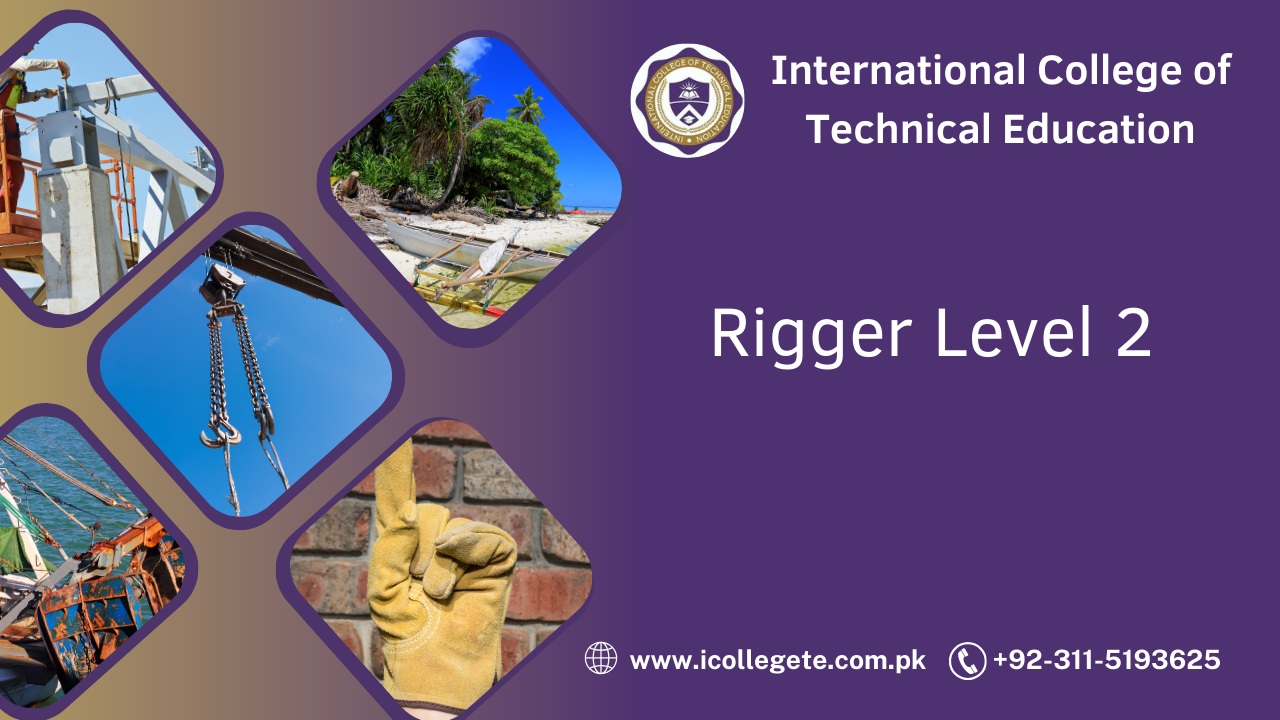
In the growing industrial and construction sectors of Pakistan, the need for skilled riggers is more important than ever. The Rigger Level 2 Course in Bannu is designed to equip individuals with the advanced knowledge and hands-on skills required to safely and efficiently manage rigging operations. Whether you’re looking to advance your career or meet workplace safety standards, this course offers a strong foundation and recognized certification for professional riggers.
The Rigger Level 2 course is a competency-based training program aimed at individuals who already have basic rigging knowledge and are looking to build on their skills. Offered in Bannu by accredited training centers, this course meets international safety and operational standards, preparing participants for more complex lifting and rigging tasks in construction, oil and gas, and heavy industry sectors.
Course Overview
This course focuses on advanced rigging techniques and safe practices. It blends theoretical instruction with practical, hands-on training to ensure participants are ready to handle real-world challenges. Participants learn to plan and execute lifting operations under supervision, interpret rigging plans, and ensure all safety regulations are met.
Duration: Typically ranges from 3 to 5 days, depending on the training provider
Mode of Delivery: Onsite classroom training combined with practical field exercises
Certification: Participants receive a Rigger Level 2 certificate upon successful completion
Study Units
The Rigger Level 2 course covers a wide range of topics, including but not limited to:
- Introduction to Rigging Equipment and Materials
- Sling Types, Selection, and Inspection
- Load Weight Estimation and Center of Gravity
- Rigging Safety Procedures and Risk Assessment
- Load Control and Communication Techniques
- Hand and Voice Signals
- Lifting Plan Interpretation
- Basic Maintenance of Rigging Equipment
- Legal and Regulatory Compliance
- Emergency Response Procedures
Learning Outcomes
By the end of the course, participants will be able to:
- Perform intermediate rigging tasks under supervision
- Identify and use various rigging equipment properly
- Assess potential hazards and apply risk control measures
- Interpret load charts and lifting plans effectively
- Communicate clearly using industry-standard signals
- Understand legal requirements related to rigging operations
- Demonstrate a commitment to workplace health and safety
Course Benefits
- Career Advancement: A certified Rigger Level 2 is often eligible for higher responsibilities and better wages
- Safety Compliance: Ensures adherence to national and international rigging safety standards
- Hands-On Experience: Real-world simulations help bridge the gap between theory and practice
- Industry Recognition: Certification is valued by employers in construction, oil and gas, shipping, and logistics
- Increased Job Opportunities: Especially in areas with expanding industrial projects such as Bannu and surrounding regions
Who Is This Course For?
This course is ideal for:
- Riggers who have completed Level 1 training
- Construction workers and site supervisors
- Individuals working in oil, gas, or marine industries
- Safety officers seeking to expand their skillset
- Anyone involved in load lifting and heavy machinery operations
Future Progression
After completing the Rigger Level 2 course, participants can pursue further specialization and leadership roles. Possible next steps include:
- Rigger Level 3 (Advanced Rigger/Supervisory Role)
- Crane Operator Certification
- Lifting Supervisor Training
- Health and Safety Officer Training
- International Certifications (e.g., from OSHA, CITB, or OPITO)
These pathways can open doors to international job markets and supervisory positions in large-scale projects.
The Rigger Level 2 course in Bannu is an excellent opportunity for individuals seeking to upgrade their rigging skills and enhance their employability in a competitive industry. With growing infrastructure and industrial development in the region, skilled riggers are in high demand. This course not only builds technical competence but also promotes a culture of safety and professionalism at the workplace.