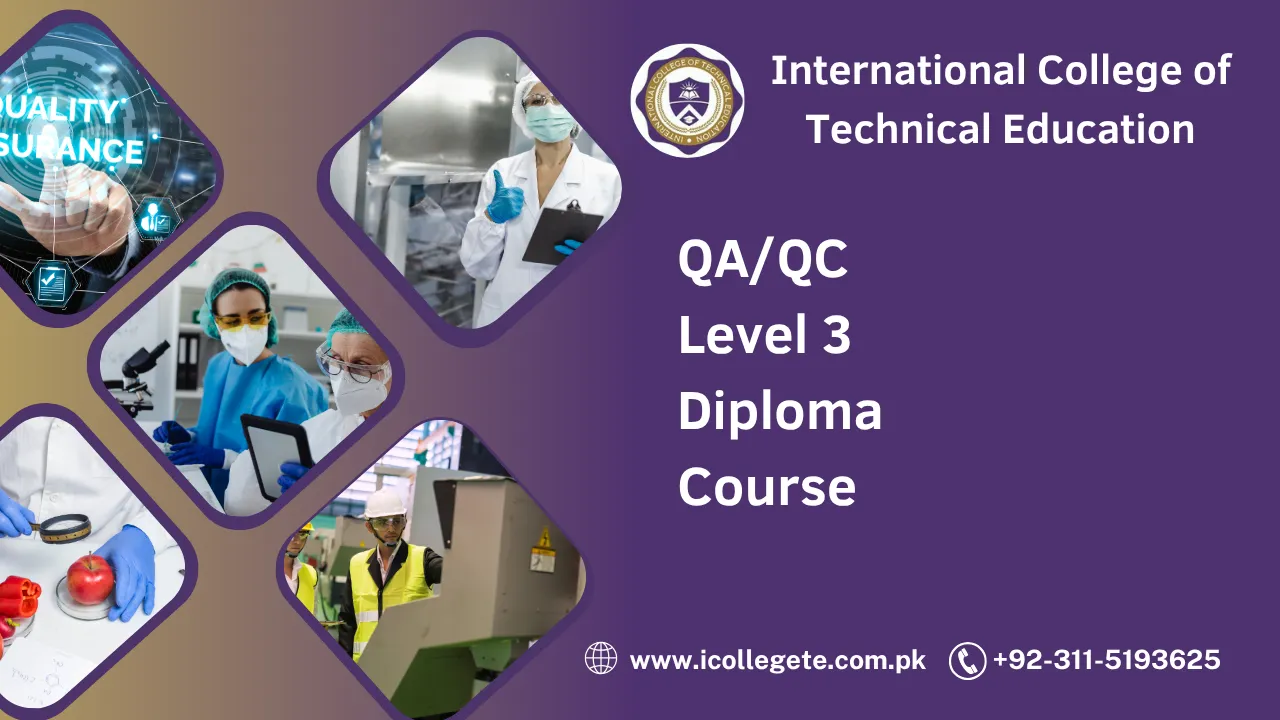
In today’s competitive industrial landscape, quality is not optional—it’s essential. The QA/QC Level 3 Diploma Course in Rawalpindi is a specialized training program that prepares individuals to take on critical roles in quality assurance and quality control across sectors such as construction, mechanical, electrical, and manufacturing. QA/QC Level 3 Diploma Course in Rawalpindi is ideal for technicians, supervisors, and early-career professionals who want to ensure compliance, safety, and performance in technical operations.
Structured to meet international standards, the QA/QC Level 3 Diploma Course in Rawalpindi covers inspection techniques, testing procedures, documentation protocols, and regulatory frameworks. Learners gain hands-on experience in identifying non-conformities, conducting audits, and implementing corrective actions. The QA/QC Level 3 Diploma Course in Rawalpindi is designed to build both technical proficiency and analytical thinking, enabling participants to contribute effectively to QA/QC teams and project success.
Delivered through practical sessions, expert-led instruction, and real-world case studies, the QA/QC Level 3 Diploma Course in Rawalpindi ensures that graduates are job-ready and capable of supporting quality systems from day one. Whether you’re entering the field or seeking to formalize your experience, QA/QC Level 3 Diploma Course in Rawalpindi offers a direct path to professional growth and industry recognition.
The QA/QC Level 3 Diploma Course in Rawalpindi is more than a qualification—it’s a gateway to a quality-driven career.
Course Overview
The QA/QC Level 3 Diploma Course in Rawalpindi is a comprehensive course-level training program designed to build foundational and applied knowledge in quality assurance and control. Structured into six specialized study units, the QA/QC Level 3 Diploma Course in Rawalpindi provides a balanced mix of theory, practical application, and industry-relevant skills.
Each unit focuses on a core area of QA/QC, including inspection methods, testing protocols, compliance documentation, risk management, safety standards, and audit preparation. Learners are trained to interpret technical drawings, conduct quality assessments, and maintain accurate records in line with national and international standards. The QA/QC Level 3 Diploma Course in Rawalpindi emphasizes precision, accountability, and continuous improvement—key traits for any quality professional.
Unlike general technical training, QA/QC Level 3 Diploma Course in Rawalpindi is tailored for those who aim to specialize in quality systems across various industries. QA/QC Level 3 Diploma Course in Rawalpindi supports career progression in sectors such as oil and gas, construction, power generation, and manufacturing. With a strong focus on practical readiness, the QA/QC Level 3 Diploma equips learners to meet the growing demand for skilled quality professionals in Pakistan and abroad. Whether you’re seeking employment, promotion, or a shift into quality-focused roles, QA/QC Level 3 Diploma Course in Rawalpindi offers the tools and credentials to help you succeed.
Course Study Units
- Principles of Quality Assurance and Quality Control
- Inspection and Testing Procedures for Technical Systems
- Regulatory Standards and Compliance Documentation
- Fault Detection and Corrective Action Planning
- Safety Protocols and Risk Management in QA/QC
- Quality Reporting, Audit Preparation, and Review
Learning Outcomes for this course
Mastering QA/QC Fundamentals
- Understand the core principles of quality assurance and quality control
- Differentiate between QA and QC roles in technical environments
- Recognize the importance of quality systems in project success
- Apply international standards such as ISO and IEC in QA/QC tasks
- Identify quality objectives and performance indicators
- Support quality planning across various technical disciplines
- Build a foundation for structured quality management
Conducting Technical Inspections and Testing
- Perform inspections on mechanical, electrical, or civil systems
- Use instruments and tools for accurate testing and verification
- Validate installations against design specifications and standards
- Identify non-conformities and document findings professionally
- Prepare inspection checklists and test reports
- Ensure systems meet operational and safety benchmarks
- Support quality control during project execution
Managing Faults and Corrective Actions
- Detect faults in technical systems and components
- Analyze root causes using structured problem-solving techniques
- Recommend and implement corrective actions effectively
- Monitor the impact of corrective measures over time
- Prevent recurrence through process adjustments and documentation
- Collaborate with teams to resolve quality issues
- Maintain records of fault resolution and follow-up
Ensuring Compliance and Documentation Accuracy
- Interpret national and international codes and regulations
- Maintain detailed records of inspections, tests, and approvals
- Prepare compliance documentation for audits and client handovers
- Ensure traceability of QA/QC activities throughout project stages
- Align documentation with legal and contractual requirements
- Facilitate communication between QA/QC and project teams
- Support regulatory readiness and transparency
Applying Safety and Risk Management in QA/QC
- Identify potential hazards in technical inspection environments
- Implement safety protocols during testing and audits
- Use PPE and safety equipment correctly and consistently
- Conduct risk assessments and mitigation planning
- Promote a safety-first culture in quality operations
- Support emergency response procedures and training
- Ensure compliance with workplace safety standards
Preparing Quality Reports and Audit Materials
- Compile inspection and test data into structured reports
- Present findings to supervisors, clients, and auditors
- Support internal and external audit processes with documentation
- Highlight trends and recurring issues in quality performance
- Recommend improvements based on audit outcomes
- Maintain confidentiality and accuracy in reporting
- Contribute to continuous improvement through audit feedback
Supporting Organizational Quality Systems
- Participate in the development of quality frameworks and procedures
- Integrate QA/QC protocols into operational workflows
- Monitor system performance using KPIs and feedback tools
- Promote consistency and reliability across departments
- Align quality systems with customer and regulatory expectations
- Support digital documentation and reporting practices
- Build readiness for quality leadership roles in technical teams
Entry Requirements for this course
- Age Requirement Applicants must be at least 18 years old. This ensures they meet the minimum legal and professional maturity required to participate in technical training and fieldwork.
- Educational Qualification A minimum of Matric (10th grade) or equivalent is required. Candidates with science or technical subjects will have an advantage in understanding QA/QC concepts and procedures.
- Work Experience Basic experience in any technical or engineering-related field is preferred. Prior exposure to inspection, maintenance, or site operations will help learners apply course content more effectively.
- Language Proficiency Applicants should have basic proficiency in English or Urdu. This is essential for understanding course materials, safety instructions, and completing documentation tasks.
- Physical Fitness Candidates must be physically fit and capable of performing manual inspections and field activities. Good vision, coordination, and mobility are important for safe and accurate QA/QC work.
- Technical Interest Applicants should demonstrate interest in quality systems, inspection procedures, and compliance standards. A willingness to learn and apply structured methods is key to success in this course.
- Identification and Documentation A valid CNIC or passport is required for registration. Educational certificates and any relevant experience documents may be requested during the enrollment process.
- Commitment to Safety and Discipline Learners must be willing to follow safety protocols, attend practical sessions regularly, and maintain discipline throughout the training. This ensures readiness for real-world QA/QC responsibilities.
Course Benefits of this course
Build Foundational QA/QC Expertise
- Understand the core principles of quality assurance and control
- Learn how QA/QC applies across mechanical, electrical, and civil disciplines
- Gain clarity on inspection procedures and compliance standards
- Develop structured thinking for quality planning and execution
- Build confidence in applying QA/QC tools and techniques
- Strengthen your ability to identify and resolve non-conformities
- Improve your understanding of international quality frameworks
- Prepare for technical roles in quality-focused environments
- Lay the groundwork for future specialization in QA/QC
Improve Inspection and Testing Skills
- Learn to conduct visual and technical inspections accurately
- Use instruments and tools for reliable testing procedures
- Validate installations against design and safety standards
- Document inspection findings with precision and clarity
- Apply structured checklists and reporting formats
- Support quality control during project implementation
- Detect faults early to prevent costly errors
- Collaborate with teams to ensure inspection readiness
- Enhance your role in technical quality assurance
Strengthen Compliance and Documentation Practices
- Maintain detailed records of inspections and approvals
- Prepare documentation for audits and client handovers
- Ensure traceability of QA/QC activities across project stages
- Align reporting with legal and contractual requirements
- Support regulatory compliance through structured documentation
- Facilitate communication between QA/QC and project teams
- Build credibility through transparent and accurate reporting
- Contribute to audit readiness and certification processes
- Promote accountability in quality systems
Enhance Safety and Risk Management Awareness
- Identify hazards in inspection and testing environments
- Apply safety protocols during QA/QC operations
- Use PPE and safety tools effectively
- Conduct risk assessments and mitigation planning
- Promote a safety-first culture in technical teams
- Support emergency response procedures and training
- Reduce liability through structured safety practices
- Ensure compliance with workplace safety standards
- Build readiness for high-risk technical environments
Expand Career Opportunities
- Qualify for roles in inspection, testing, and compliance
- Increase employability in construction, manufacturing, and engineering sectors
- Build a foundation for advancement to senior QA/QC positions
- Prepare for trade tests and certification programs
- Gain recognition as a skilled quality technician
- Open doors to local and international job markets
- Enhance your resume with a specialized diploma credential
- Position yourself for freelance and contract-based work
- Support long-term career growth in quality-driven industries
Support Organizational Quality Goals
- Contribute to consistent and reliable project outcomes
- Help reduce rework and delays through early fault detection
- Improve customer satisfaction through quality assurance
- Support compliance with client specifications and standards
- Promote efficiency in project execution and delivery
- Align QA/QC practices with broader organizational goals
- Strengthen internal quality culture and accountability
- Enhance team performance through structured quality systems
- Drive measurable improvements in operational outcomes
Apply QA/QC Tools and Techniques
- Use checklists, forms, and templates professionally
- Apply root cause analysis to resolve recurring issues
- Implement corrective actions based on inspection results
- Monitor effectiveness of quality interventions
- Support process optimization through structured reviews
- Use data to identify trends and improvement areas
- Integrate QA/QC tools into daily technical routines
- Build confidence in using industry-standard methods
- Promote continuous learning through tool-based analysis
Foster Practical Readiness and Professional Growth
- Learn to work in diverse technical environments
- Handle tools and equipment with precision and safety
- Interpret drawings and specifications accurately
- Communicate effectively with engineers and supervisors
- Adapt to site conditions and project requirements
- Manage time and tasks efficiently during inspections
- Support team coordination and task execution
- Build resilience and problem-solving skills in field scenarios
- Prepare for real-world challenges in QA/QC roles
Who Should Enroll in this course
- Technical Diploma Holders Individuals with diplomas in electrical, mechanical, or civil trades seeking to specialize in QA/QC.
- Site Inspectors Professionals responsible for monitoring construction or engineering work who want formal QA/QC training.
- Junior QA/QC Assistants Entry-level staff in quality departments aiming to build structured knowledge and skills.
- Maintenance Technicians Workers maintaining systems and equipment who want to improve fault detection and documentation.
- Construction Supervisors Supervisors overseeing technical work who need to ensure compliance and quality standards.
- Safety Officers Professionals managing workplace safety who want to integrate QA/QC into risk management.
- Project Coordinators Staff involved in managing timelines and deliverables who need to understand inspection protocols.
- Freelance Contractors Independent technicians offering services who want to add QA/QC capabilities to their portfolio.
- Audit Support Staff Individuals assisting in internal or external audits who need to understand quality documentation.
- Vocational Institute Graduates Students from technical institutes seeking practical specialization in quality systems.
- Engineers in Training Early-career engineers who want to build foundational QA/QC skills before advancing.
- Utility Sector Employees Workers in power, water, or gas distribution who need to ensure quality in infrastructure.
- Manufacturing Line Operators Staff involved in production who want to support quality assurance and reduce defects.
- Technical Sales Representatives Sales professionals dealing with industrial products who want to understand quality standards.
- Facility Managers Managers of buildings or plants who oversee maintenance and compliance.
- Renewable Energy Technicians Professionals working with solar or wind systems who want to ensure installation quality.
- Civil Works Inspectors Individuals inspecting roads, bridges, or infrastructure who need QA/QC expertise.
- Oil and Gas Field Workers Technicians in energy sectors who want to meet international quality and safety standards.
- Quality Control Personnel from Other Fields Professionals in non-technical QA/QC roles seeking to transition into engineering-related quality work.
- Anyone Seeking a Stable Technical Career Individuals looking for a respected, skill-based profession with strong demand locally and abroad.
Future Progression of this course
Advancement to Specialized QA/QC Certifications
- Pursue certifications such as ISO 9001 Lead Auditor, Six Sigma Green Belt, or IEC Compliance
- Qualify for advanced QA/QC roles in inspection, documentation, and audit preparation
- Strengthen your profile for roles requiring certified quality system knowledge
- Prepare for internal and external audit responsibilities across technical sectors
- Align with international standards for overseas employment opportunities
- Build readiness for client-facing quality assurance responsibilities
- Expand your professional credibility with recognized quality credentials
Employment in Technical QA/QC Roles
- Apply for positions such as QA/QC Inspector, Quality Technician, or Compliance Coordinator
- Support quality assurance in construction, manufacturing, and engineering environments
- Conduct inspections and testing on mechanical, electrical, and civil systems
- Collaborate with project teams to ensure quality compliance and reporting
- Build experience for promotion to senior QA/QC or supervisory roles
- Contribute to performance improvement and safety assurance programs
- Strengthen organizational quality culture through technical expertise
Freelance and Contract-Based Opportunities
- Offer independent QA/QC inspection services to contractors and engineering firms
- Build a client base through reliable quality documentation and reporting
- Provide third-party inspection and compliance verification for technical projects
- Develop service packages for residential, commercial, and industrial quality audits
- Collaborate with project managers on quality planning and execution
- Create a sustainable income stream through freelance technical work
- Establish a reputation as a trusted QA/QC consultant
Roles in Audit and Compliance Support
- Assist in preparing documentation for internal and external audits
- Monitor corrective actions and evaluate their effectiveness
- Support departments in meeting regulatory and client standards
- Train staff on audit readiness and reporting protocols
- Contribute to risk mitigation through structured quality reviews
- Build audit frameworks aligned with project and organizational goals
- Ensure traceability and transparency in quality processes
Quality System Development and Implementation
- Design and implement quality systems tailored to technical workflows
- Integrate QA/QC protocols into engineering and operational procedures
- Evaluate system performance using KPIs and inspection data
- Support digital documentation and reporting processes
- Collaborate with teams to embed quality practices across departments
- Promote consistency and reliability in project execution
- Align systems with customer and regulatory expectations
Training and Instructional Roles
- Conduct workshops on QA/QC principles and inspection tools
- Develop training materials for vocational and technical institutes
- Mentor junior technicians in inspection and compliance practices
- Support curriculum development for quality-related programs
- Promote awareness of quality standards and best practices
- Build partnerships for workforce development in technical QA/QC
- Contribute to institutional excellence through instructional support
Continuous Professional Development
- Attend seminars and webinars on QA/QC standards and technologies
- Join professional associations for quality and compliance professionals
- Stay updated with evolving tools and methodologies
- Participate in online courses for niche QA/QC skills
- Reflect on work practices for ongoing improvement
- Engage in peer learning and technical forums
- Maintain a portfolio of certifications and achievements
Strategic Roles in Technical Planning
- Contribute to long-term quality planning in technical projects
- Align QA/QC goals with customer satisfaction and operational efficiency
- Evaluate cost-effectiveness of quality interventions
- Support innovation through quality-driven process design
- Influence policy development through technical quality insights
- Present performance reports to senior stakeholders
- Drive measurable improvements in project outcomes and safety standards
Conclusion
The QA/QC Level 3 Diploma Course in Rawalpindi is more than a technical qualification—QA/QC Level 3 Diploma Course in Rawalpindi is a strategic investment in your future. In a world where precision, compliance, and accountability define professional success, QA/QC Level 3 Diploma Course in Rawalpindi positions you to meet industry expectations with confidence and clarity.
What makes QA/QC Level 3 Diploma Course in Rawalpindi distinctive is its emphasis on practical readiness and structured thinking. QA/QC Level 3 Diploma Course in Rawalpindi doesn’t just teach you how to inspect or report—QA/QC Level 3 Diploma Course in Rawalpindi trains you to anticipate challenges, uphold standards, and contribute meaningfully to project outcomes. The QA/QC Level 3 Diploma Course in Rawalpindi fosters a mindset of ownership, where quality becomes a personal and professional commitment.
Graduates emerge not only with technical skills but with the ability to influence processes, support teams, and drive improvements. Whether you’re entering the workforce, transitioning roles, or seeking recognition for your experience, QA/QC Level 3 Diploma Course in Rawalpindi equips you to stand out in competitive environments.
It’s a course for those who value precision, understand the importance of compliance, and are ready to take responsibility for the integrity of their work. With growing demand for quality professionals across sectors, QA/QC Level 3 Diploma Course in Rawalpindi offers a clear path to relevance, reliability, and long-term career growth.