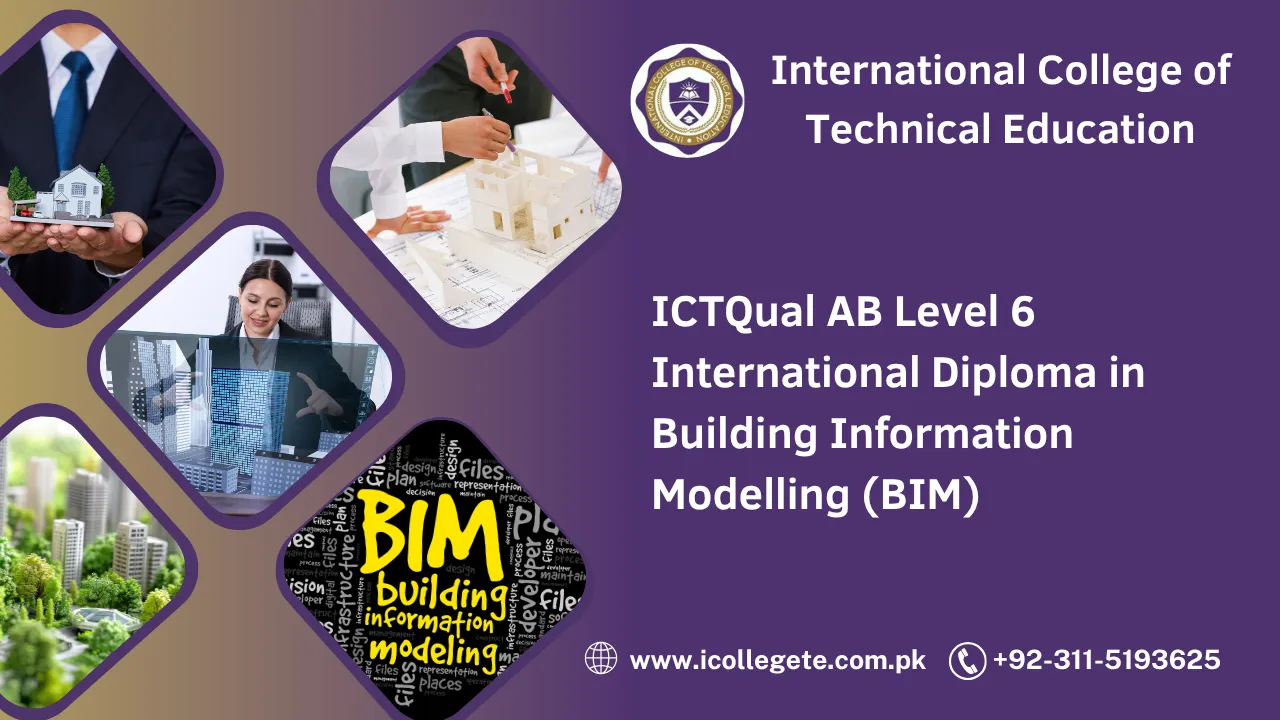
The ICTQual AB Level 6 International Diploma in Building Information Modelling (BIM) is a globally recognized qualification designed to develop the professional skills, knowledge, and competencies required to implement and manage BIM processes in the construction and infrastructure sectors. BIM has revolutionized the way buildings and projects are planned, designed, constructed, and maintained. ICTQual AB Level 6 International Diploma in Building Information Modelling (BIM) equips learners with advanced technical expertise to integrate digital technologies into the building lifecycle, enabling smarter decision-making, enhanced collaboration, and cost efficiency.
Building Information Modelling (BIM) is now a critical standard in modern construction projects worldwide, promoting data-driven design, coordination, and sustainability. The ICTQual AB Level 6 International Diploma in Building Information Modelling (BIM) provides learners with a deep understanding of digital design workflows, 3D modeling, project data management, and the interoperability of software systems. Through ICTQual AB Level 6 International Diploma in Building Information Modelling (BIM), learners gain practical experience in creating, managing, and analyzing digital project models that support efficient collaboration among architects, engineers, contractors, and facility managers.
ICTQual AB Level 6 International Diploma in Building Information Modelling (BIM) bridges the gap between traditional construction methods and the modern digital era by focusing on technological innovation and integrated project delivery. Learners will develop skills to coordinate complex multi-disciplinary models, reduce design errors, enhance visualization, and improve project outcomes. The ICTQual AB Level 6 International Diploma in Building Information Modelling (BIM) also emphasizes the importance of sustainability, energy efficiency, and lifecycle cost analysis in BIM-driven environments.
Graduates of the ICTQual AB Level 6 International Diploma in Building Information Modelling (BIM) become competent professionals ready to lead digital transformation initiatives in construction organizations, consultancy firms, architectural practices, and infrastructure development projects worldwide. The ICTQual AB Level 6 International Diploma in Building Information Modelling (BIM) provides a strong foundation for career advancement and further education in advanced BIM management and digital construction leadership.
Course Overview
The ICTQual AB Level 6 International Diploma in Building Information Modelling (BIM) delivers comprehensive training on BIM concepts, standards, workflows, and implementation strategies. Learners gain hands-on experience with BIM software, data management tools, and collaborative design environments essential for the digital construction industry.
Course Study Units
This qualification, the ICTQual AB Level 6 International Diploma in Building Information Modelling (BIM)e, consists of 36 mandatory units.
Year 1 – Foundation in Building Information Modelling (BIM)
- Principles of Building Information Modelling
- Introduction to Digital Construction Projects
- Construction Materials and Methods for BIM
- Project Planning and Scheduling in BIM
- Risk Assessment and Management in Digital Projects
- Health, Safety, and Environmental Awareness
- BIM Communication and Stakeholder Management
- Construction Technology Fundamentals
- Financial Management in BIM Projects
- Quality Assurance and Control in BIM
- Legal and Regulatory Frameworks in Construction
- Professional Ethics and Conduct in Digital Construction
Year 2 – Intermediate BIM Practices
- Advanced BIM Modelling Techniques
- Resource Management and Allocation in BIM Projects
- Project Cost Estimation and Budgeting using BIM
- Construction Contract Administration in Digital Projects
- Procurement and Supply Chain Management in BIM
- Project Risk Analysis and Mitigation
- Leadership and Team Management in BIM Environments
- Site and Workshop Management with BIM Integration
- Sustainability and Environmental Management in BIM Projects
- Project Monitoring and Reporting using Digital Tools
- Problem-Solving and Decision-Making in BIM Projects
- Communication and Negotiation Skills in Digital Construction
Year 3 – Advanced BIM and Strategic Leadership
- Strategic BIM Management in Construction Projects
- Advanced Construction Project Design with BIM
- Infrastructure Project Management using BIM
- Innovation and Emerging Technologies in BIM
- Advanced Risk and Crisis Management in Digital Projects
- Contract Management and Legal Compliance for BIM
- Leadership in BIM-Driven Construction Projects
- Advanced Project Control and Performance Measurement
- Project Governance and Compliance in Digital Construction
- Research Methods and Project Analysis for BIM
- Capstone Project in Building Information Modelling
- Professional Development and Career Planning
Course Learning Outcomes
- Understand the principles, processes, and benefits of Building Information Modelling (BIM)
- Develop and manage 3D, 4D, and 5D digital project models
- Apply BIM standards and protocols for project coordination and delivery
- Utilize leading BIM software and collaborative platforms effectively
- Implement digital workflows across multidisciplinary project teams
- Perform cost estimation, scheduling, and quantity takeoff using BIM tools
- Evaluate and manage project data through Common Data Environments (CDE)
- Ensure compliance with legal, safety, and quality standards in BIM projects
- Integrate sustainability and energy efficiency in building designs
- Coordinate and lead digital construction teams in complex projects
- Analyze and interpret project data for improved decision-making
- Promote collaboration among designers, engineers, and contractors
- Identify and mitigate risks through BIM-based planning and control
- Apply knowledge of BIM for facility management and lifecycle planning
- Engage in research and continuous improvement in digital construction technologies
Entry Requirements for this Course
- A Level 5 Diploma or equivalent qualification in construction, engineering, or a related discipline
- Minimum age of 18 years at enrollment
- Proficiency in English language for academic and technical study
- Basic computer literacy and familiarity with design or engineering software
- Understanding of construction processes and project management principles
- Strong analytical and problem-solving skills
- Interest in digital technologies and innovation in construction
- Ability to interpret technical drawings and 3D visualizations
- Commitment to teamwork and collaborative working environments
- Motivation to pursue a career in digital construction and project management
- Prior experience in construction, architecture, or engineering (preferred)
- Access to a computer capable of running BIM software for practice
- Ability to manage complex data and multi-disciplinary coordination
- Willingness to learn new technologies and adapt to industry trends
- Academic transcripts or equivalent evidence of qualification and experience
Course Benefits
- Globally recognized qualification in Building Information Modelling (BIM)
- Provides comprehensive knowledge of digital design and construction technologies
- Enhances employability in architecture, engineering, and construction management sectors
- Develops advanced skills in BIM coordination and data management
- Equips learners to lead digital transformation in construction organizations
- Strengthens understanding of sustainable and energy-efficient design practices
- Offers practical experience with industry-standard BIM software tools
- Prepares learners for professional BIM management roles worldwide
- Improves efficiency, communication, and accuracy in project delivery
- Builds leadership, collaboration, and problem-solving competencies
- Encourages innovation and continuous improvement in construction practices
- Supports professional recognition and career advancement opportunities
- Integrates real-world projects and case studies for applied learning
- Enables specialization in digital construction, smart infrastructure, or facility management
- Opens pathways to further qualifications in BIM and digital construction management
Why Someone Should Choose this Course
- Offers a modern qualification aligned with international BIM standards and practices
- Ideal for professionals seeking to enhance digital skills in construction management
- Combines theoretical learning with practical, hands-on BIM training
- Prepares learners for roles in digital construction, BIM coordination, and project leadership
- Recognized by global construction firms, architectural studios, and government agencies
- Enhances productivity and reduces project costs through technology integration
- Provides expertise in managing 3D, 4D, and 5D BIM environments
- Encourages collaboration and data-driven decision-making in project execution
- Suitable for engineers, architects, and project managers seeking professional growth
- Focuses on sustainability and smart infrastructure development
- Strengthens competitive advantage in the global construction market
- Develops essential skills for managing BIM projects from design to handover
- Builds professional credibility in the digital construction sector
- Offers global networking and career development opportunities
- Provides lifelong learning and adaptability in evolving construction technologies
Who Can Enroll in this Course
The ICTQual AB Level 6 International Diploma in Building Information Modelling (BIM) is ideal for architects, civil engineers, construction managers, and design professionals seeking to specialize in digital project management. ICTQual AB Level 6 International Diploma in Building Information Modelling (BIM) is suitable for professionals working in architecture, infrastructure, and engineering industries who want to gain expertise in BIM implementation and coordination.
ICTQual AB Level 6 International Diploma in Building Information Modelling (BIM) also benefits graduates aspiring to enter the digital construction field, as well as contractors, consultants, and facility managers who aim to improve project efficiency through BIM. Individuals passionate about adopting innovative technologies and advancing their careers in smart construction and sustainable design will find ICTQual AB Level 6 International Diploma in Building Information Modelling (BIM) an excellent choice.
Future Progression for this Course
- Progression to ICTQual Level 7 or a master’s degree in BIM Management or Digital Construction
- Career advancement to roles such as BIM Manager, BIM Coordinator, or Digital Construction Lead
- Opportunities to work with global architectural, engineering, and construction firms
- Qualification pathway toward professional certifications in BIM and project management
- Engagement in large-scale smart infrastructure and urban development projects
- Employment in digital consultancy, design management, or facility operations
- Leadership roles in implementing BIM strategies and digital workflows
- Development of research and innovation projects in construction technology
- Opportunities to contribute to sustainable and energy-efficient building initiatives
- Academic and teaching roles in BIM and digital construction education
- Consultancy in digital transformation and smart city planning
- Collaboration with multinational organizations in technology-driven construction projects
- Pathway to doctoral studies in BIM or construction informatics
- Establishment of independent BIM consultancy services
- Long-term professional growth in global digital construction industries