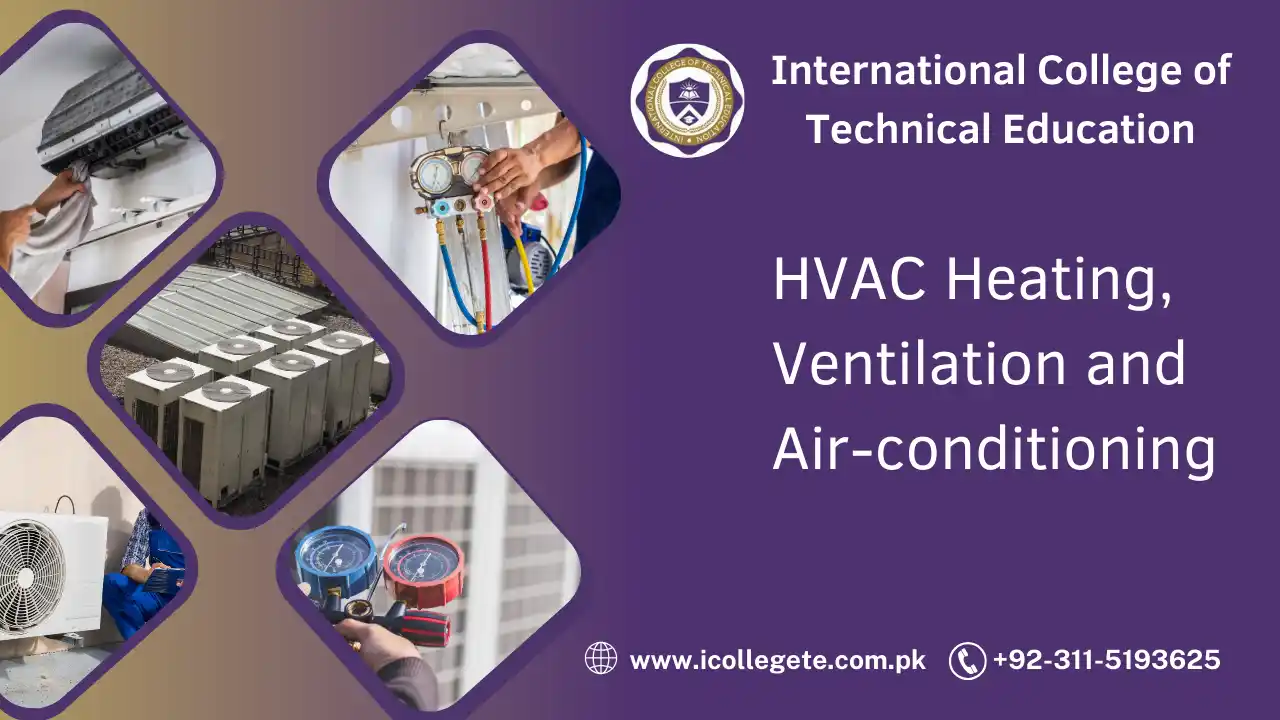
As the global climate continues to shift and technological advancements in building systems grow, the demand for skilled HVAC (Heating, Ventilation, and Air Conditioning) technicians is skyrocketing. HVAC systems are essential for maintaining comfortable, safe, and energy-efficient indoor environments in homes, offices, commercial buildings, and industrial facilities.
The HVAC Heating, Ventilation, and Air Conditioning Course in Islamabad is designed to provide students with a comprehensive understanding of the HVAC systems that control the air quality, temperature, and humidity of indoor spaces. This course equips students with the necessary technical knowledge and practical skills to work with various HVAC systems, including residential, commercial, and industrial applications. Whether you’re interested in installation, repair, maintenance, or system design, this course provides all the foundational knowledge needed to succeed in the HVAC industry.
Course Overview
This HVAC course is structured to cover all aspects of heating, ventilation, and air conditioning systems. Students will gain a deep understanding of how HVAC systems function and learn how to install, repair, and maintain these systems effectively. The curriculum combines theory with hands-on training, ensuring that students have both the knowledge and the experience to work in real-world environments. From understanding the core components of HVAC systems to learning advanced troubleshooting techniques, the course prepares students to be proficient HVAC professionals.
Key Components of the Course:
- Introduction to HVAC Systems and Components
- Installation and Maintenance of Heating and Cooling Systems
- Refrigeration Fundamentals
- Air Quality and Ventilation Systems
- Troubleshooting and Repairing HVAC Systems
- Energy-Efficient HVAC Practices
Study Units
The HVAC Heating, Ventilation, and Air Conditioning Course consists of several core study units, each focused on a key area of HVAC systems. These units include:
- Introduction to HVAC Systems:
- Basic principles of heating, ventilation, and air conditioning.
- Overview of HVAC components: compressors, condensers, evaporators, heat exchangers, and ductwork.
- Types of HVAC systems: split systems, packaged units, central systems, and ductless mini-splits.
- Heating Systems:
- Understanding different types of heating systems: furnaces, boilers, heat pumps, and space heaters.
- Installation and maintenance procedures for heating systems.
- Troubleshooting common heating system problems such as poor heating or gas leaks.
- Cooling Systems and Refrigeration:
- Fundamentals of refrigeration and the role of cooling systems in HVAC.
- Installation and maintenance of air conditioning units and refrigeration systems.
- Understanding refrigerants, pressure-temperature relationships, and the refrigeration cycle.
- Ventilation and Air Quality:
- Principles of ventilation, airflow, and humidity control.
- Understanding the role of air filters, ducts, and ventilation systems in maintaining indoor air quality.
- Techniques for designing and installing ventilation systems in residential and commercial buildings.
- Energy-Efficient HVAC Practices:
- How to design and install energy-efficient HVAC systems.
- Understanding modern energy-saving technologies such as variable speed drives, energy recovery ventilators, and geothermal systems.
- Best practices for optimizing HVAC systems to reduce energy consumption and costs.
- Troubleshooting and Repairs:
- Diagnosing common issues with HVAC systems such as airflow problems, temperature imbalances, and refrigerant leaks.
- Hands-on training for repairing and replacing components such as thermostats, compressors, and motors.
- Maintenance techniques to extend the lifespan of HVAC equipment.
Learning Outcomes
By the end of the HVAC Heating, Ventilation, and Air Conditioning Course in Islamabad, students will be able to:
- Understand the basic principles of heating, ventilation, and air conditioning systems.
- Install, maintain, and repair a variety of HVAC systems, including residential, commercial, and industrial models.
- Work with refrigeration systems, including proper handling of refrigerants and maintaining system efficiency.
- Design and implement energy-efficient HVAC solutions to minimize environmental impact and operating costs.
- Troubleshoot and resolve common HVAC problems, ensuring systems run smoothly and efficiently.
- Understand the importance of indoor air quality and implement effective ventilation and filtration techniques.
Course Benefits
Enrolling in the HVAC Heating, Ventilation, and Air Conditioning Course provides numerous benefits, including:
- Comprehensive Skill Development: Students will acquire both theoretical knowledge and practical skills in HVAC system installation, maintenance, and repair, making them well-rounded professionals in the field.
- Hands-On Experience: The course includes hands-on training in real-world scenarios, giving students the chance to work with actual HVAC equipment and systems, ensuring they’re job-ready upon graduation.
- High Demand for HVAC Technicians: The HVAC industry is growing rapidly due to increasing construction projects, a focus on energy efficiency, and climate control technologies. This course prepares students to meet the high demand for skilled HVAC technicians.
- Career Stability and Job Opportunities: With the expanding construction and real estate sectors, as well as the ongoing need for system repairs and upgrades, HVAC technicians enjoy job stability and a wide range of career opportunities.
- Competitive Salaries: Skilled HVAC professionals are in high demand, and as such, the field offers competitive salaries, making it a lucrative career choice. The potential for overtime and emergency call-out work can further increase earnings.
- Certification and Credibility: Upon successful completion of the course, students will receive a recognized certification that validates their skills and enhances their employability in the HVAC industry.
Who is This Course For?
The HVAC Heating, Ventilation, and Air Conditioning Course is ideal for:
- Beginners: Those with no prior knowledge of HVAC systems but who are eager to begin a career in the field.
- Current Technicians: HVAC professionals who want to upgrade their skills or learn new techniques and systems in the HVAC industry.
- Engineers and Architects: Professionals who want to gain deeper knowledge about HVAC systems to apply in building design and construction projects.
- Entrepreneurs: Individuals looking to start their own HVAC business, offering installation, repair, and maintenance services to clients.
- Career Changers: Those interested in switching careers and entering the highly-demanded HVAC industry.
Future Progression After the Course
Graduates of the HVAC Heating, Ventilation, and Air Conditioning Course can pursue several exciting career paths:
- Work as an HVAC Technician: Graduates can start working as HVAC technicians, handling the installation, maintenance, and repair of heating and cooling systems for residential, commercial, or industrial clients.
- Specialize in Energy-Efficient HVAC Systems: With a growing focus on sustainability and energy efficiency, HVAC technicians can specialize in designing and installing energy-efficient systems, providing clients with cost-saving solutions and greener options.
- Progress to Supervisor or Managerial Roles: After gaining experience, HVAC technicians can move into supervisory or managerial roles, overseeing teams of technicians, managing projects, and ensuring systems meet industry standards and regulations.
- Pursue Further Education and Certifications: Graduates may choose to pursue advanced certifications or education in specialized areas like refrigeration, green technologies, or HVAC design to further enhance their expertise and career prospects.
- Start Your Own HVAC Business: With the skills and knowledge acquired from this course, graduates can establish their own HVAC service company, providing installations, repairs, and maintenance services to residential and commercial clients.
- Explore International Job Opportunities: HVAC technicians are in demand globally, especially in countries with large-scale construction projects or a need for energy-efficient systems. Graduates can explore job opportunities abroad and enjoy international career growth.
The HVAC Heating, Ventilation, and Air Conditioning Course in Islamabad is a gateway to a rewarding and secure career in the growing field of HVAC technology. Whether you’re looking to enter the industry, expand your skill set, or specialize in energy-efficient systems, this course offers the comprehensive training and hands-on experience you need to succeed. With the increasing demand for skilled technicians, this course provides an excellent foundation for a long-lasting and profitable career in HVAC.