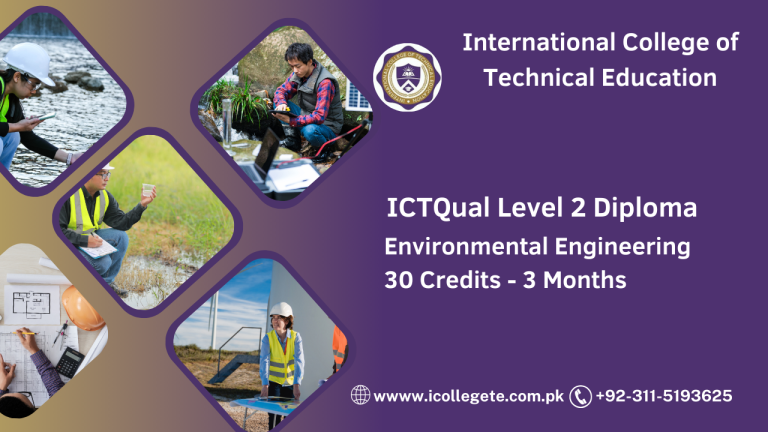
In an age where environmental issues such as climate change, pollution, and resource depletion are increasingly urgent, the role of environmental engineers has become more critical than ever. The Environmental Engineering course in Gujarat offers students and professionals an opportunity to develop the skills and knowledge needed to address today’s environmental challenges through innovative and sustainable solutions.
Environmental Engineering is an interdisciplinary branch of engineering that focuses on protecting and improving environmental quality through science, technology, and engineering principles. The course aims to equip learners with the tools to design systems and solutions for water and air pollution control, waste management, sustainable development, and environmental impact assessment.
In Gujarat, a state known for its rapid industrial growth and commitment to sustainability, the demand for trained environmental engineers is steadily increasing. The course serves as a platform for students to become part of the global effort toward environmental preservation and sustainable infrastructure.
Course Overview
Environmental Engineering courses in Gujarat are offered at both undergraduate and postgraduate levels. The Bachelor of Engineering (B.E.) or Bachelor of Technology (B.Tech) in Environmental Engineering is typically a four-year program, while the Master of Engineering (M.E.) or Master of Technology (M.Tech) is a two-year course. Some institutes also offer diploma and certification programs.
- Duration: 3–4 years (Undergraduate), 2 years (Postgraduate), 1–2 years (Diploma/Certificate)
- Mode of Study: Full-time classroom learning with practical sessions and project work
- Affiliation: AICTE/UGC-recognized institutions and universities
- Eligibility: 10+2 with Physics, Chemistry, and Mathematics (for undergraduate), B.E./B.Tech in relevant field (for postgraduate)
Study Units
The curriculum is designed to offer both theoretical knowledge and hands-on experience. Core subjects typically include:
- Environmental Chemistry and Microbiology
- Water Supply and Wastewater Engineering
- Solid and Hazardous Waste Management
- Air Pollution Control Engineering
- Environmental Impact Assessment (EIA)
- Industrial Waste Treatment
- Climate Change and Sustainability
- Hydrology and Groundwater Engineering
- Remote Sensing and GIS for Environmental Applications
- Renewable Energy Technologies
- Environmental Laws and Policy
- Design of Environmental Systems
In addition to these, students may engage in laboratory work, field visits, industry internships, and final-year projects addressing real-world environmental problems.
Learning Outcomes
Upon completing the Environmental Engineering course, students will be able to:
- Understand the scientific principles underlying environmental processes
- Design systems for water purification, air pollution control, and waste management
- Assess the environmental impact of various industrial and developmental activities
- Apply engineering tools and technologies to solve environmental problems
- Interpret environmental data using modern techniques such as GIS and modeling software
- Ensure compliance with environmental regulations and policies
Course Benefits
- High Demand: With increasing environmental regulations and the global push for sustainability, trained environmental engineers are in high demand.
- Diverse Career Options: Graduates can work in public and private sectors, including industries, environmental consulting firms, research institutes, and government bodies.
- Contribution to Society: The course empowers students to contribute to societal well-being by solving pressing environmental issues.
- Interdisciplinary Learning: Combines elements of civil, chemical, and mechanical engineering with environmental science, offering a broad technical foundation.
- Global Relevance: Skills acquired are applicable not only in India but across the world, aligning with international sustainability goals.
Who Is This Course For?
The Environmental Engineering course is ideal for:
- Students passionate about environmental sustainability and science
- Aspiring engineers seeking a career in environmental protection
- Professionals in civil, chemical, or mechanical engineering looking to specialize
- Policy makers and environmental consultants
- Individuals aiming to contribute to sustainable development initiatives
Future Progression
After completing a degree or diploma in Environmental Engineering, graduates can pursue:
- Postgraduate Studies: M.E./M.Tech, MBA in Environmental Management, or foreign universities offering MS in Environmental Science or Engineering
- Certifications: Specialized certifications like ISO 14001 Lead Auditor, Environmental Impact Assessment (EIA) training, and Pollution Control Board training programs
- Research and Development: Opportunities in national and international research institutes focusing on climate change, renewable energy, and sustainable development
- Government Services: Positions in environmental departments, pollution control boards, and public sector undertakings (PSUs)
- Entrepreneurship: Startups in waste management, water treatment, or green energy technologies
The Environmental Engineering course in Gujarat is more than just a technical program; it is a gateway to making a meaningful impact on the planet. By equipping students with the knowledge and tools to tackle environmental issues head-on, this course supports the vision of a cleaner, safer, and more sustainable future. Whether you’re a student with a passion for nature or a professional seeking to transition into a green career, this course offers the skills and opportunities to lead environmental innovation in India and beyond.