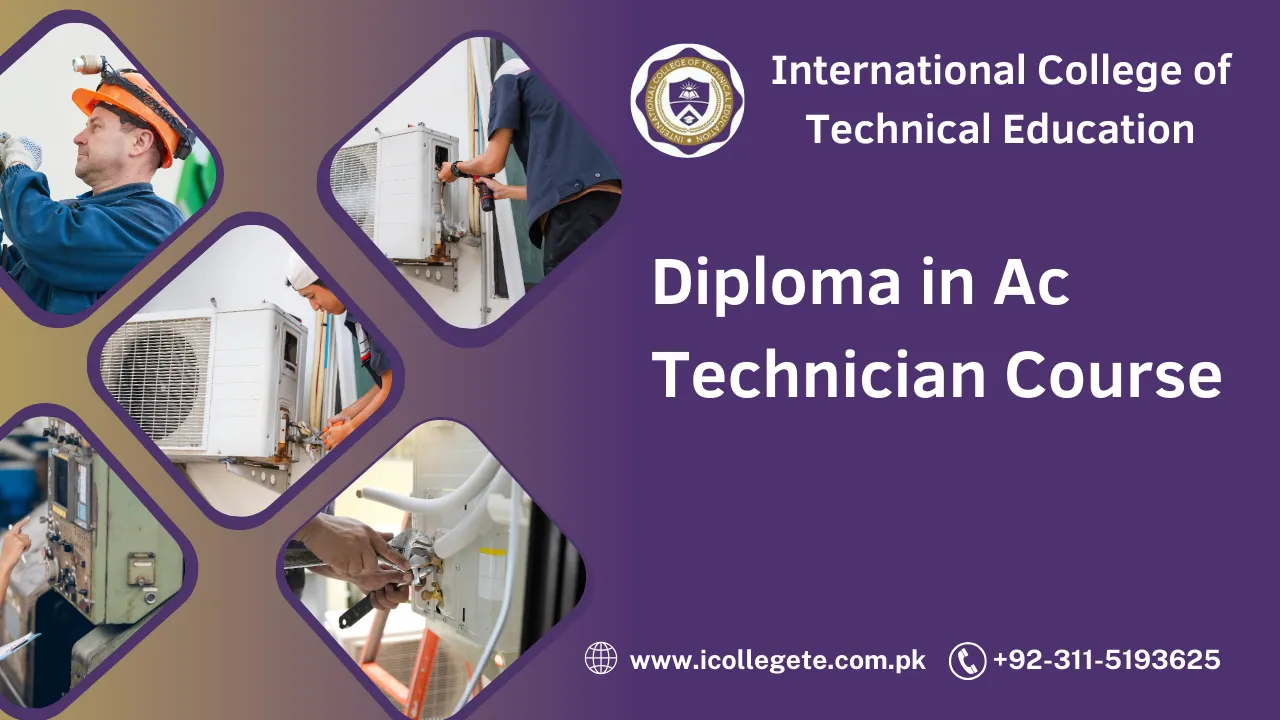
The Diploma in AC Technician Course in Peshawar is designed to provide learners with the technical knowledge and practical skills required to install, maintain, and repair air conditioning systems. With the rising demand for cooling solutions in homes, offices, and industries, this course prepares participants to meet the growing need for skilled AC technicians.
Learners will gain hands‑on training in refrigeration cycles, electrical components, troubleshooting techniques, and safety practices. The program emphasizes both theoretical understanding and practical application, ensuring graduates are job‑ready and capable of handling real‑world challenges in the HVAC (Heating, Ventilation, and Air Conditioning) field.
By enrolling in this diploma, participants not only enhance their technical expertise but also open doors to employment opportunities in Pakistan and abroad. This qualification is ideal for those seeking a stable and rewarding career in one of the most in‑demand technical trades.
Course Overview
The Diploma in AC Technician Course offers a structured curriculum that covers the essentials of air conditioning systems, installation practices, and repair techniques. Learners are introduced to modern tools, industry standards, and safety regulations to ensure they can work confidently and effectively.
This program bridges classroom learning with practical workshops, preparing graduates for roles as AC technicians, maintenance staff, or supervisors. It ensures learners are equipped with industry‑relevant skills that make them highly employable in both local and international markets.
Entry Requirements
To enroll in this diploma, learners must meet basic eligibility criteria to ensure they can fully benefit from the program.
- Age Requirements: Applicants must be at least 16 years old.
- Qualification Requirements: Minimum of secondary school education (matriculation or equivalent).
- Professional Experience: No prior experience required, though exposure to technical or mechanical work is beneficial.
- Educational Background: Open to learners from all educational backgrounds.
Course Study Units
- Introduction to Air Conditioning Systems
- Refrigeration Cycle and Components
- Electrical Wiring and Controls in AC Systems
- Installation Techniques for Split and Window Units
- Troubleshooting and Repair Methods
- Preventive Maintenance Practices
- Safety Standards and Regulations
- Practical Workshops and Field Training
Course Learning Outcomes
By the end of this diploma, learners will be able to:
Understanding AC Systems
- Explain the fundamentals of air conditioning and refrigeration.
- Identify components and their functions in AC systems.
- Understand electrical wiring and control mechanisms.
Installation and Maintenance
- Perform installation of split and window AC units.
- Apply preventive maintenance practices to extend system life.
- Ensure compliance with safety standards during installation.
Troubleshooting and Repair
- Diagnose common faults in AC systems.
- Repair electrical and mechanical issues effectively.
- Conduct performance testing after repairs.
Professional Readiness
- Demonstrate confidence in handling AC projects.
- Communicate effectively with clients and supervisors.
- Work independently or as part of a technical team.
Course Benefits
This diploma offers multiple benefits for learners aiming to build careers in the HVAC industry.
1. Career Advancement
- Gain a recognized qualification in AC technology.
- Access opportunities in residential, commercial, and industrial sectors.
- Strengthen employability for technician and supervisory roles.
2. Technical Skill Development
- Learn practical installation and repair techniques.
- Understand troubleshooting and preventive maintenance.
- Develop hands‑on expertise through workshops and field training.
3. Industry Relevance
- Acquire skills aligned with modern HVAC standards.
- Meet employer expectations for safety and compliance.
- Apply knowledge across diverse AC projects.
4. Personal Growth
- Build confidence in managing technical responsibilities.
- Develop problem‑solving and decision‑making skills.
- Cultivate a mindset of continuous improvement.
Who Can Enroll
This diploma is open to a wide range of learners who want to enhance their career prospects in AC technology.
Students and Fresh Graduates
- Those seeking entry into technical or mechanical careers.
- Learners aiming to strengthen their CV with a recognized qualification.
- Individuals interested in skilled trade professions.
Industry Professionals
- Workers in construction, maintenance, or HVAC sectors.
- Supervisors and technicians seeking specialized training.
- Quality assurance staff aiming to expand technical expertise.
Career Changers
- Individuals transitioning into AC technology.
- Professionals exploring opportunities in technical trades.
- Workers aiming to diversify their skill set.
Future Progression
Completing this diploma opens multiple pathways for academic and career growth.
Advanced Qualifications
- Progress to higher diplomas in HVAC engineering or technology.
- Access specialized training in refrigeration and renewable cooling systems.
Career Opportunities
- Secure roles as AC Technicians, Maintenance Supervisors, or HVAC Specialists.
- Advance to managerial positions in construction and maintenance services.
- Enhance employability in international markets.
Professional Recognition
- Apply for membership in technical and engineering bodies.
- Gain credibility with globally recognized certifications.
- Strengthen professional networks in the HVAC industry.
Higher Education Pathways
- Transition into undergraduate programs in mechanical or HVAC engineering.
- Pursue degrees in industrial management or technical education.
- Access international study opportunities.
The Diploma in AC Technician Course in Peshawar is a comprehensive program tailored to meet the growing demand for skilled HVAC professionals in Pakistan and abroad. By combining theoretical knowledge with practical training, the course ensures learners are well‑prepared to handle responsibilities in residential, commercial, and industrial environments. It emphasizes safety, compliance, and technical expertise, making graduates valuable assets to any organization.