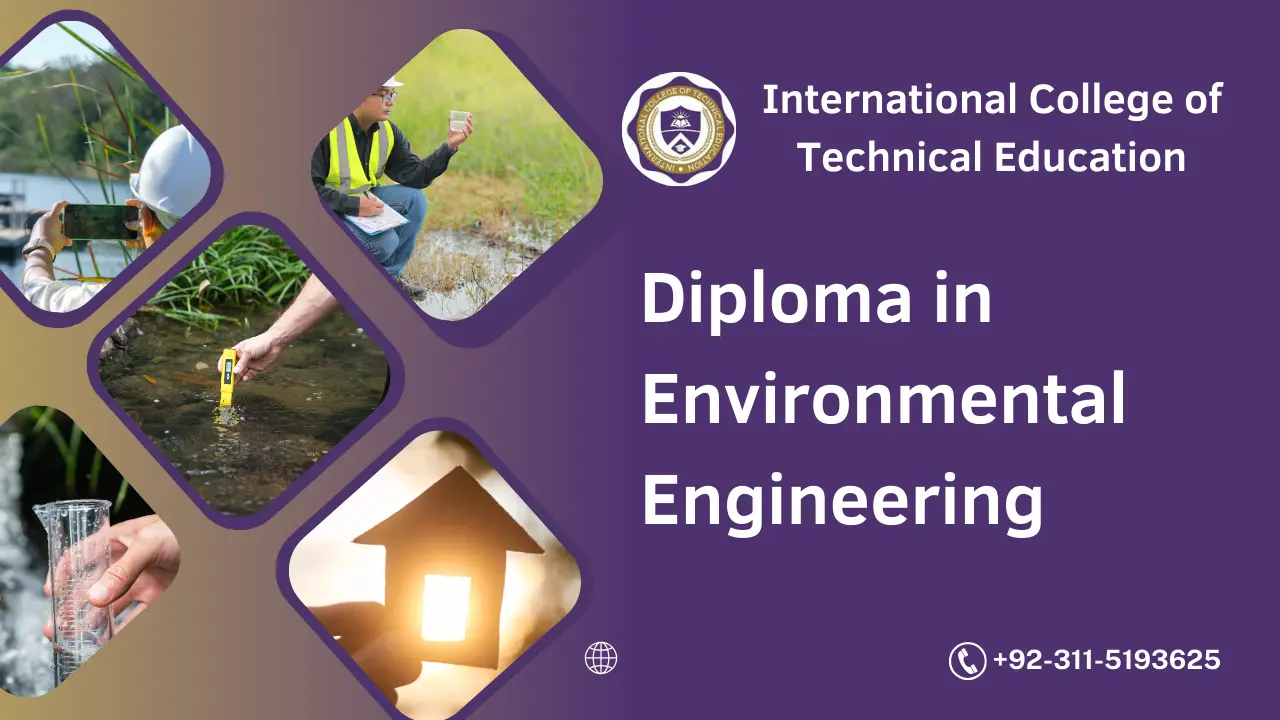
In an era defined by environmental challenges and the urgent need for sustainable solutions, the field of environmental engineering stands at the forefront of innovation and problem-solving. With a focus on protecting and preserving natural resources, mitigating pollution, and promoting sustainable development, environmental engineers play a crucial role in shaping a more sustainable future. The Diploma in Environmental Engineering serves as a gateway to this dynamic and rewarding field, offering students the knowledge and skills needed to tackle pressing environmental issues and drive positive change.
Diploma in Environmental Engineering
The Diploma in Environmental Engineering is a comprehensive program designed to provide students with a strong foundation in the principles and practices of environmental engineering. Through a combination of theoretical coursework, laboratory exercises, and fieldwork, students gain an understanding of key concepts such as water and wastewater treatment, air pollution control, solid waste management, environmental impact assessment, and sustainable development. The curriculum is carefully crafted to equip graduates with the technical expertise and problem-solving skills needed to address complex environmental challenges.
Course Benefits
- Practical Skills: Students gain hands-on experience with state-of-the-art equipment and technologies used in environmental engineering, preparing them for real-world applications.
- Industry-Relevant Knowledge: The curriculum is designed in consultation with industry experts to ensure that graduates are equipped with the latest knowledge and best practices in the field.
- Career Opportunities: Graduates of the program are well-positioned to pursue diverse career paths in environmental engineering, including roles in consulting firms, government agencies, research institutions, and non-profit organizations.
- Impactful Work: Environmental engineers have the opportunity to make a meaningful difference by addressing pressing environmental challenges and contributing to the creation of a more sustainable world.
Study Units
The Diploma in Environmental Engineering typically covers a wide range of study units, including but not limited to:
- Introduction to Environmental Engineering
- Environmental Chemistry and Biology
- Water and Wastewater Treatment
- Air Pollution Control
- Solid Waste Management
- Environmental Impact Assessment
- Sustainable Development and Green Technologies
Learning Outcomes
Upon completion of the program, students can expect to:
- Understand the fundamental principles of environmental engineering and their application to real-world problems.
- Analyze and evaluate environmental issues, including water and air pollution, solid waste management, and environmental degradation.
- Design and implement engineering solutions for the treatment and management of water, wastewater, and air pollutants.
- Conduct environmental impact assessments to evaluate the potential environmental effects of proposed projects or developments.
- Apply sustainable practices and green technologies to promote environmental conservation and resource efficiency.
- Communicate effectively with stakeholders, including government agencies, community groups, and industry partners, to address environmental concerns and advocate for sustainable solutions.
Who is This Course For
The Diploma in Environmental Engineering is suitable for:
- Aspiring environmental engineers seeking to launch their careers in the field of environmental engineering.
- Current engineering students or professionals looking to specialize in environmental engineering and pursue opportunities in the environmental sector.
- Individuals passionate about environmental conservation and sustainability, with a desire to make a positive impact on the environment and society.
- Anyone interested in addressing pressing environmental challenges and contributing to the development of sustainable solutions for a better future.
Future Progression
Upon completing the Diploma in Environmental Engineering, graduates have several pathways for further advancement and specialization:
- Advanced Studies: Pursue further education, such as a bachelor’s or master’s degree in environmental engineering or a related field, to deepen knowledge and expertise in specific areas of interest.
- Professional Certification: Obtain professional certifications, such as the Professional Engineer (PE) license or the Leadership in Energy and Environmental Design (LEED) accreditation, to enhance credentials and career prospects.
- Research and Development: Explore opportunities in research institutions, government agencies, or private companies to contribute to cutting-edge research and innovation in environmental engineering.
- Consulting and Advocacy: Work for consulting firms, non-profit organizations, or government agencies to provide expertise and guidance on environmental issues, policy development, and sustainable practices.
In conclusion, the Diploma in Environmental Engineering offers a valuable opportunity for individuals passionate about environmental conservation and sustainability to make a positive impact through their work. With its practical curriculum, industry relevance, and diverse career opportunities, this program equips graduates with the knowledge and skills needed to address complex environmental challenges and contribute to the creation of a more sustainable world. Whether you’re just starting your journey or seeking to advance your career, the Diploma in Environmental Engineering provides a solid foundation for a rewarding and impactful career in environmental engineering.