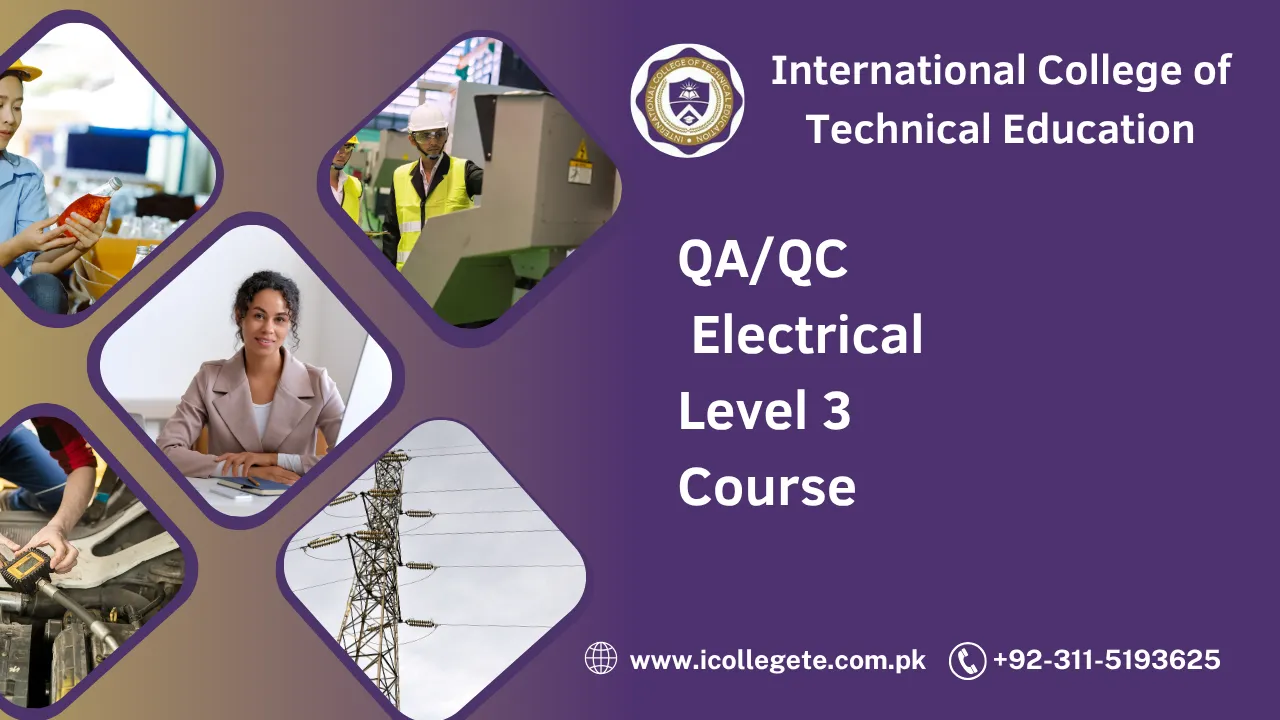
Advance your technical career with the QA/QC Electrical Level 3 Course in Rawalpindi—a specialized training program designed to develop high-level expertise in electrical quality assurance and quality control. QA/QC Electrical Level 3 Course in Rawalpindi is ideal for professionals seeking to master inspection procedures, compliance standards, and documentation practices in electrical systems across industrial, commercial, and infrastructure projects.
The QA/QC Electrical Level 3 Course in Rawalpindi focuses on advanced QA/QC protocols, including electrical testing methods, inspection techniques, international standards (such as IEC and IEEE), and project documentation. Learners will gain hands-on experience in evaluating electrical installations, identifying non-conformities, and ensuring compliance with safety and performance benchmarks.
Delivered by industry-experienced instructors, the course blends theoretical instruction with practical field applications. Participants will learn how to interpret electrical drawings, conduct site inspections, prepare quality reports, and coordinate with engineering and safety teams. The QA/QC Electrical Level 3 Course in Rawalpindi also emphasizes risk mitigation, audit preparation, and client communication—critical skills for QA/QC professionals in high-stakes environments.
Whether you’re working in construction, power distribution, oil and gas, or facility maintenance, this Level 3 certification equips you with the tools to lead quality initiatives and uphold technical standards. The QA/QC Electrical Level 3 Course in Rawalpindi is a strategic step for those aiming to elevate their role in electrical engineering and quality management.
Course Overview
The QA/QC Electrical Level 3 Course in Rawalpindi is a professional-level training program structured around six specialized study units that cover the full scope of electrical quality assurance and control. Designed for technicians, inspectors, and engineers, QA/QC Electrical Level 3 Course in Rawalpindi provides a comprehensive pathway to mastering advanced QA/QC practices in electrical systems.
Each study unit focuses on a critical domain: electrical codes and standards, inspection and testing procedures, documentation and reporting, non-conformance management, site coordination and safety compliance, and audit readiness. The QA/QC Electrical Level 3 Course in Rawalpindi ensures learners build both technical precision and procedural discipline required in high-risk environments.
What sets QA/QC Electrical Level 3 Course in Rawalpindi apart is its emphasis on field applicability and international relevance. Participants are trained to work confidently with electrical installations, interpret complex schematics, and manage quality documentation across diverse project settings. The QA/QC Electrical Level 3 Course in Rawalpindi prepares learners to meet global standards and client expectations in sectors such as construction, energy, and industrial maintenance. With its structured format and outcome-driven approach, the QA/QC Electrical Level 3 Course in Rawalpindi supports career advancement, certification readiness, and operational excellence in the electrical engineering domain.
Course Study Units
- Electrical Codes, Standards, and Regulatory Compliance
- Inspection Techniques and Testing Procedures for Electrical Systems
- Quality Documentation, Reporting, and Record Management
- Non-Conformance Identification and Corrective Action Planning
- Site Coordination, Safety Protocols, and Risk Mitigation
- Audit Preparation, Client Communication, and Quality Assurance Strategy
Learning Outcomes for this course
Mastery of Electrical Codes and Standards
- Understand key international standards such as IEC, IEEE, and NEC
- Interpret electrical codes relevant to industrial and commercial installations
- Apply compliance requirements during inspection and documentation
- Identify deviations from standard practices in real-world scenarios
- Ensure installations meet safety, performance, and regulatory benchmarks
- Support project teams in aligning with client and legal specifications
- Build confidence in enforcing quality standards across project phases
Proficiency in Inspection and Testing Procedures
- Conduct insulation resistance, continuity, and polarity tests
- Use multimeters, clamp meters, and megohmmeters for field testing
- Perform visual inspections of panels, wiring, and terminations
- Verify grounding and bonding systems for safety compliance
- Document test results and interpret findings accurately
- Identify and report installation defects or safety hazards
- Ensure readiness for commissioning and handover
Competence in Quality Documentation and Reporting
- Prepare inspection test plans (ITPs) and checklists
- Maintain daily reports, NCR logs, and quality records
- Draft method statements and inspection requests
- Use standard formats for QA/QC documentation
- Communicate findings clearly through structured reports
- Support traceability and audit readiness through organized records
- Collaborate with engineers and supervisors on documentation flow
Skills in Non-Conformance and Corrective Action
- Identify non-conformities during inspections and testing
- Classify issues based on severity and project impact
- Recommend corrective and preventive actions (CAPA)
- Coordinate with site teams to resolve quality issues
- Track NCRs and verify closure through re-inspection
- Maintain logs for recurring issues and lessons learned
- Support continuous improvement through root cause analysis
Site Coordination and Safety Compliance
- Participate in toolbox talks and safety briefings
- Enforce lockout/tagout and PPE protocols during inspections
- Coordinate with HSE teams to align QA/QC with safety goals
- Monitor site activities for quality and safety integration
- Report unsafe practices and recommend corrective measures
- Ensure inspection activities do not disrupt site operations
- Promote a culture of safety and quality awareness
Audit Preparation and Quality Assurance Strategy
- Prepare documentation and evidence for internal and external audits
- Support third-party inspections and client walkthroughs
- Align QA/QC activities with project milestones and deliverables
- Develop quality strategies for electrical system lifecycle
- Participate in quality review meetings and technical discussions
- Evaluate subcontractor performance and compliance
- Contribute to project close-out and final quality reports
Entry Requirements for this course
- Age Requirement Applicants must be at least 20 years old. This ensures they have the maturity and professional readiness to handle advanced technical content and field responsibilities.
- Educational Qualification Candidates should have completed a Diploma of Associate Engineering (DAE) in Electrical or equivalent. A strong foundation in electrical principles is essential for understanding QA/QC standards and inspection procedures.
- Work Experience At least 1–2 years of practical experience in electrical installation, maintenance, or supervision is recommended. Prior exposure to site work or technical documentation will support faster learning and application.
- Language Proficiency Participants should be able to read and understand technical English. This is necessary for interpreting standards, preparing reports, and communicating with clients and engineering teams.
- Technical Familiarity Applicants must be comfortable using basic electrical tools and testing instruments. Familiarity with drawings, schematics, and site procedures will enhance training outcomes.
- Learning Commitment Candidates must be willing to attend all sessions, complete assignments, and participate in practical exercises. Consistent engagement is critical for certification and skill development.
- Safety Awareness A basic understanding of workplace safety and PPE usage is required. The course includes field-based activities where adherence to safety protocols is mandatory.
- Documentation Skills Applicants should be able to maintain inspection records and follow structured reporting formats. This supports audit readiness and quality compliance throughout the course.
Course Benefits of this course
Advanced Electrical Quality Assurance Skills
- Gain expertise in inspecting electrical systems for compliance and safety
- Learn to apply international standards such as IEC, IEEE, and NEC
- Understand how to verify installation quality across various project types
- Develop skills in identifying and documenting non-conformities
- Improve accuracy in electrical testing and performance validation
- Build confidence in handling complex inspection scenarios
- Support engineering teams with quality-focused insights
- Enhance your ability to manage quality across project phases
- Prepare for leadership roles in electrical QA/QC
Practical Field-Based Training
- Participate in hands-on exercises using real testing instruments
- Simulate inspection procedures in controlled environments
- Learn to interpret electrical drawings and schematics
- Practice preparing inspection reports and quality records
- Gain exposure to site coordination and safety protocols
- Apply QA/QC techniques in mock project settings
- Understand how to manage inspection workflows on active sites
- Build readiness for field audits and client walkthroughs
- Strengthen your ability to work under real-world conditions
Career Advancement in Technical Roles
- Qualify for senior technician and inspector positions
- Increase your value in construction, energy, and industrial sectors
- Build a professional profile aligned with global QA/QC standards
- Improve your eligibility for international job placements
- Gain recognition through Level 3 certification
- Access roles in project supervision and quality management
- Enhance your resume with specialized electrical QA/QC credentials
- Position yourself for long-term career growth
- Open pathways to freelance and consultancy work
Improved Documentation and Reporting Skills
- Learn to prepare inspection test plans and method statements
- Maintain structured logs for non-conformities and corrective actions
- Draft clear and professional quality reports
- Support audit readiness through organized documentation
- Communicate findings effectively with clients and engineers
- Use standard formats for QA/QC records and checklists
- Ensure traceability and compliance in reporting
- Build habits of precision and consistency in documentation
- Strengthen your role in quality communication
Enhanced Safety and Compliance Awareness
- Understand electrical safety protocols and risk mitigation strategies
- Apply lockout/tagout procedures during inspections
- Coordinate with HSE teams to align quality and safety goals
- Identify and report unsafe practices on site
- Promote a culture of safety in QA/QC operations
- Learn to enforce PPE usage and hazard controls
- Support compliance with national and international safety standards
- Reduce risk through proactive inspection planning
- Build credibility in safety-conscious environments
Readiness for Audit and Certification Processes
- Prepare for internal and external quality audits
- Understand documentation requirements for certification bodies
- Support third-party inspections with structured evidence
- Align QA/QC activities with project milestones and deliverables
- Participate in client reviews and technical meetings
- Ensure installations meet certification and regulatory benchmarks
- Build systems that support audit success
- Gain confidence in handling certification procedures
- Improve organizational readiness for quality evaluations
Sector-Wide Applicability and Flexibility
- Apply QA/QC skills in construction, oil and gas, power, and infrastructure projects
- Adapt inspection techniques to different electrical environments
- Support quality initiatives in both public and private sectors
- Work with diverse teams across engineering and operations
- Contribute to sustainable and efficient project delivery
- Build transferable skills for multiple industries
- Respond effectively to client-specific quality requirements
- Support long-term project reliability and performance
- Expand your professional reach across technical domains
Personal and Professional Growth
- Develop analytical thinking and problem-solving abilities
- Improve decision-making through structured inspection methods
- Build leadership qualities in quality-focused roles
- Gain confidence in presenting technical findings
- Cultivate a proactive and responsible work ethic
- Strengthen adaptability in dynamic project environments
- Enhance your professional identity as a QA/QC specialist
- Prepare for continuous learning in electrical and quality disciplines
Who Should Enroll in this course
- Electrical Supervisors and Foremen Professionals overseeing electrical installation teams who want to formalize their quality control knowledge and improve site inspection practices.
- DAE Electrical Graduates Diploma holders in Electrical Engineering seeking to specialize in QA/QC and enhance their employability in industrial and construction sectors.
- Site Engineers and Junior Electrical Engineers Engineers involved in project execution who need structured training in inspection, documentation, and compliance with international standards.
- Quality Control Inspectors (Electrical) Individuals already working in QA/QC roles who want to upgrade their skills to Level 3 and qualify for senior positions or international assignments.
- Technicians in Power Plants and Substations Electrical technicians working in high-voltage environments who require advanced knowledge of testing, safety, and quality assurance.
- Oil and Gas Sector Professionals Workers in energy and petrochemical industries where electrical QA/QC is critical for safety, reliability, and regulatory compliance.
- Construction and Infrastructure Personnel Electricians and supervisors involved in large-scale building projects who want to ensure quality in electrical installations and commissioning.
- Maintenance and Facility Managers Professionals responsible for electrical systems in commercial or industrial facilities who need to implement quality checks and preventive measures.
- Freelance Electrical Contractors Independent professionals offering electrical services who want to add QA/QC certification to their portfolio for better client trust and project eligibility.
- Project Coordinators and Document Controllers Staff managing inspection records, test reports, and quality documentation who need to understand technical QA/QC requirements.
- Safety Officers with Electrical Backgrounds HSE professionals who want to integrate electrical quality checks into safety audits and risk assessments.
- Engineers Preparing for Gulf or Overseas Jobs Candidates targeting international markets where QA/QC certification is a prerequisite for technical roles.
- Technical Trainers and Instructors Educators in vocational institutes who want to update their curriculum and teach industry-relevant QA/QC practices.
- Government and Utility Sector Employees Staff involved in public infrastructure, power distribution, or regulatory bodies who need to ensure compliance with electrical standards.
- Quality Assurance Professionals from Other Fields QA personnel from mechanical or civil backgrounds transitioning into electrical QA/QC roles for multidisciplinary project involvement.
- Electrical Design Engineers Designers who want to understand how their plans are evaluated and inspected during execution, improving design-to-field alignment.
- Audit and Compliance Officers Professionals conducting internal or third-party audits who need technical insight into electrical QA/QC procedures.
- Vocational Students Seeking Specialization Learners who have completed basic electrical training and want to specialize in quality control for better job prospects.
- Individuals Seeking Career Change into Technical QA/QC Career changers with a technical mindset looking to enter the electrical quality assurance field with a recognized certification.
- Anyone Passionate About Electrical Safety and Standards Individuals committed to improving the quality, safety, and reliability of electrical systems in their workplace or community.
Future Progression of this course
Advanced QA/QC Certifications
- Pursue ISO 9001 Lead Auditor certification for quality audit roles
- Enroll in Six Sigma Green Belt training to specialize in process improvement
- Obtain certification in IEC or NEC compliance for international project eligibility
- Explore Level 4 QA/QC programs for deeper technical and managerial expertise
- Join workshops on advanced inspection planning and risk-based auditing
- Build credentials for third-party inspection and consultancy roles
- Strengthen your profile for quality leadership positions in technical environments
Specialized Electrical Testing and Inspection Training
- Learn advanced testing techniques for high-voltage and industrial systems
- Gain expertise in thermographic inspection and cable fault detection
- Train in relay testing and substation equipment evaluation
- Understand power quality analysis and harmonics testing
- Apply diagnostic tools for predictive maintenance and system reliability
- Participate in hands-on labs for specialized electrical inspections
- Prepare for roles in commissioning and system validation
Career Growth in Technical and Supervisory Roles
- Qualify for senior QA/QC inspector or electrical supervisor positions
- Transition into site coordination and quality management roles
- Lead inspection teams on large-scale infrastructure and energy projects
- Support project planning with quality input and documentation oversight
- Contribute to client meetings and technical reviews as a QA/QC expert
- Build experience for roles in operations and compliance departments
- Position yourself for long-term career advancement in engineering fields
Freelance and Consultancy Opportunities
- Offer independent QA/QC services to contractors and engineering firms
- Conduct electrical audits and compliance assessments for clients
- Develop customized inspection plans and quality manuals
- Provide training sessions for junior technicians and site staff
- Support certification readiness for small and medium enterprises
- Build a portfolio of successful quality projects for marketing and referrals
- Establish a consultancy brand focused on electrical quality assurance
Integration with Digital QA/QC Tools
- Learn to use digital platforms for inspection tracking and reporting
- Apply software tools for real-time quality monitoring and analytics
- Use mobile apps for site inspections and documentation
- Understand cloud-based systems for record management and audit preparation
- Explore automation in electrical testing and compliance workflows
- Support digital transformation in quality departments
- Stay updated with emerging technologies in electrical QA/QC
Sector-Specific Progression Paths
- Work in oil and gas projects requiring strict electrical quality protocols
- Join power generation and distribution companies for QA/QC roles
- Support infrastructure development in transport, telecom, and utilities
- Contribute to renewable energy installations with quality oversight
- Apply QA/QC skills in manufacturing and industrial automation
- Assist government and regulatory bodies in inspection and compliance
- Build expertise in sector-specific standards and documentation practices
Opportunities in Technical Education and Training
- Become a trainer in vocational institutes or technical academies
- Develop course content for electrical QA/QC programs
- Conduct workshops and seminars for industry professionals
- Mentor junior inspectors and technicians in field practices
- Collaborate with institutions for curriculum development
- Share practical insights through webinars and technical forums
- Build a career in workforce development and technical instruction
Conclusion
The QA/QC Electrical Level 3 Course in Rawalpindi offers more than technical instruction—it delivers a professional mindset built on precision, accountability, and real-world readiness. In an industry where safety, compliance, and performance are non-negotiable, QA/QC Electrical Level 3 Course in Rawalpindi helps learners become trusted contributors to high-stakes electrical projects.
What makes QA/QC Electrical Level 3 Course in Rawalpindi distinctive is its ability to transform routine tasks into strategic quality actions. Participants learn to see beyond the checklist, understanding how each inspection, report, and decision impacts broader project outcomes. The QA/QC Electrical Level 3 Course in Rawalpindi fosters a proactive approach to quality—one that anticipates issues, prevents failures, and supports long-term reliability.
Graduates of QA/QC Electrical Level 3 Course in Rawalpindi don’t just follow standards—they help define and uphold them. Whether working on-site, coordinating with teams, or preparing for audits, they bring clarity, structure, and confidence to every phase of electrical work. The QA/QC Electrical Level 3 Course in Rawalpindi encourages learners to think critically, communicate effectively, and lead with integrity.