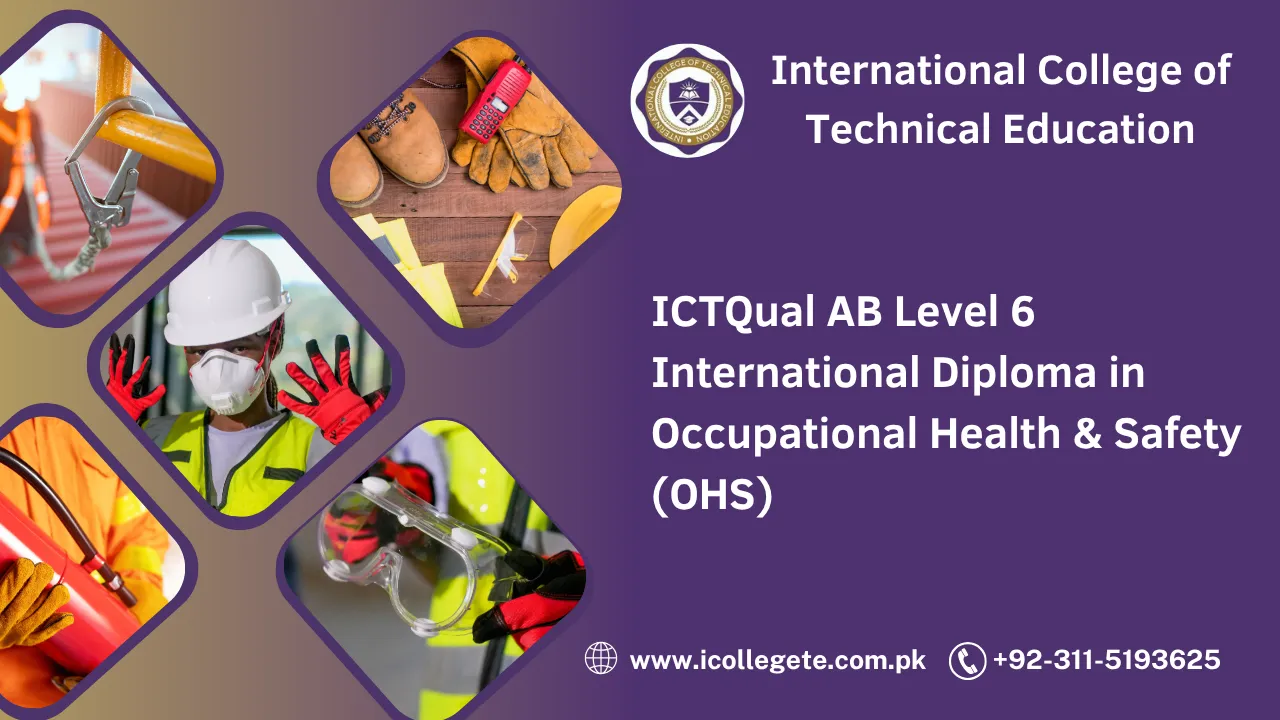
Ensuring workplace safety and maintaining health standards is a critical priority for organizations worldwide. The ICTQual AB Level 6 International Diploma in Occupational Health & Safety (OHS) is a comprehensive program designed to equip professionals with the advanced knowledge and skills needed to manage workplace health, safety, and risk effectively. ICTQual AB Level 6 International Diploma in Occupational Health & Safety (OHS) focuses on providing learners with practical, technical, and managerial competencies to foster safe work environments and ensure regulatory compliance across diverse industries.
ICTQual AB Level 6 International Diploma in Occupational Health & Safety (OHS) emphasizes modern approaches to occupational health and safety management, combining theoretical knowledge with real-world applications. Learners will gain expertise in risk assessment, accident prevention, hazard identification, and the development of proactive safety strategies. The curriculum also covers essential legal frameworks, workplace safety audits, emergency preparedness, and the promotion of a safety-oriented organizational culture.
With a focus on leadership and strategic decision-making, this program prepares participants to implement effective safety policies, manage health and safety teams, and lead organizational change to reduce workplace incidents. The ICTQual AB Level 6 International Diploma in Occupational Health & Safety (OHS) is ideal for professionals aiming to advance in occupational health, safety, and environmental management roles, including safety officers, HSE managers, supervisors, and consultants.
By completing the ICTQual AB Level 6 International Diploma in Occupational Health & Safety (OHS), learners not only enhance their career prospects but also contribute to building safer, healthier, and more productive workplaces. ICTQual AB Level 6 International Diploma in Occupational Health & Safety (OHS) opens doors to global opportunities, positioning professionals as experts in occupational health and safety management while supporting organizational compliance and sustainable operational excellence.
Course Overview: ICTQual AB Level 6 International Diploma in Occupational Health & Safety (OHS)
The ICTQual AB Level 6 International Diploma in Occupational Health & Safety (OHS) is designed to provide professionals with advanced knowledge and practical skills in managing workplace health, safety, and risk. ICTQual AB Level 6 International Diploma in Occupational Health & Safety (OHS) covers hazard identification, risk assessment, safety audits, emergency preparedness, and compliance with international OHS standards. Learners will gain expertise in developing and implementing effective safety policies, promoting a safety culture, and leading health and safety teams across diverse industries.
The ICTQual AB Level 6 International Diploma in Occupational Health & Safety (OHS) blends theoretical understanding with real-world applications, preparing participants for senior roles such as HSE managers, safety officers, and OHS consultants. By completing this internationally recognized qualification, professionals enhance their career prospects while ensuring safer, healthier, and more productive work environments, making ICTQual AB Level 6 International Diploma in Occupational Health & Safety (OHS) a vital credential for anyone aiming to excel in occupational health and safety management globally.
Course Study Units
This qualification, the ICTQual AB Level 6 International Diploma in Occupational Health & Safety (OHS), consists of 36 mandatory units.
Year 1 – Foundation of Occupational Health & Safety (OHS)
- Principles of Occupational Health & Safety Management
- International Health & Safety Legislation and Compliance
- Risk Assessment and Hazard Identification
- Accident Investigation and Incident Reporting
- Fire Safety and Emergency Preparedness
- Environmental Health & Safety (EHS) Fundamentals
- Workplace Ergonomics and Human Factors
- Safety Culture and Behavioural Safety
- Occupational Health and Industrial Hygiene
- Personal Protective Equipment (PPE) Management
- Workplace Safety Auditing and Monitoring
- Communication and Training in Health & Safety
Year 2 – Applied Occupational Health & Safety (OHS)
- Advanced Risk Management and Control Strategies
- Safety Leadership and Organizational Culture
- International Standards and ISO 45001 Implementation
- Construction and High-Risk Industry Safety
- Process Safety and Chemical Hazard Management
- Occupational Disease Prevention and Control
- Crisis and Disaster Management in the Workplace
- Transportation and Logistics Safety Management
- Contractor and Supply Chain Safety Oversight
- Sustainability and Corporate Responsibility in OHS
- Research Methods in Occupational Health & Safety
- Final Project / Professional Practice in OHS
Year 3 – Professional Competence and Specialized OHS Practice
- Strategic OHS Management and Policy Development
- Advanced Workplace Health Promotion and Well-being
- Safety Technology, Digital Tools, and Data Analytics
- Global Perspectives in Occupational Health & Safety
- Corporate Governance and Ethical Responsibilities in OHS
- Industrial Safety in Oil, Gas, and Energy Sectors
- Safety in Healthcare and Public Service Environments
- Emerging Risks and Future Trends in Workplace Safety
- Training Design and Development for OHS Professionals
- Independent Research Project in Occupational Health & Safety
- Professional Practice, Portfolio, and Competence Review
- Final Capstone Project / Dissertation
Learning Outcomes: ICTQual AB Level 6 International Diploma in Occupational Health & Safety (OHS)
Understanding Occupational Health & Safety Principles
- Develop a comprehensive understanding of occupational health and safety concepts and frameworks.
- Recognize the importance of workplace safety and its impact on productivity and employee well-being.
- Understand legal, regulatory, and ethical obligations in OHS management.
- Identify common workplace hazards across different industries.
- Learn principles of risk assessment and accident prevention.
- Explore the role of safety culture in organizational performance.
- Understand international OHS standards and best practices.
Risk Assessment and Hazard Management
- Conduct systematic workplace risk assessments and hazard identification.
- Evaluate potential risks and determine their impact on health and safety.
- Develop strategies to mitigate or eliminate workplace hazards.
- Apply quantitative and qualitative risk assessment methods.
- Monitor and review risk management procedures for continuous improvement.
- Implement control measures to minimize accidents and injuries.
- Ensure compliance with health, safety, and environmental regulations.
Safety Policy Development and Implementation
- Design effective OHS policies aligned with organizational goals.
- Implement safety management systems and operational procedures.
- Establish protocols for emergency preparedness and response.
- Promote health and safety awareness among employees.
- Conduct regular audits to ensure policy adherence.
- Identify gaps in current safety practices and recommend improvements.
- Align policies with national and international OHS standards.
Health & Safety Leadership and Management
- Lead workplace safety teams and promote a proactive safety culture.
- Develop skills for supervising health and safety operations effectively.
- Enhance decision-making and problem-solving capabilities in OHS scenarios.
- Coordinate training programs and workshops for employees.
- Monitor safety performance and generate reports for management.
- Drive initiatives for continuous improvement in workplace safety.
- Build strategic plans for long-term occupational health and safety goals.
Incident Investigation and Reporting
- Conduct thorough investigations of workplace accidents and near-misses.
- Identify root causes and contributing factors of incidents.
- Prepare detailed reports for management and regulatory authorities.
- Recommend corrective actions to prevent recurrence.
- Maintain records in compliance with legal requirements.
- Analyze trends to identify systemic safety issues.
- Apply best practices in incident documentation and reporting.
Emergency Preparedness and Response
- Develop emergency response plans for various workplace scenarios.
- Conduct drills and training for staff on emergency procedures.
- Assess emergency equipment and resource readiness.
- Coordinate with internal teams and external agencies during crises.
- Implement evacuation plans and communication strategies.
- Evaluate response effectiveness and update procedures as needed.
- Ensure continuous readiness for workplace emergencies.
Continuous Improvement in OHS
- Monitor and evaluate OHS performance metrics regularly.
- Implement strategies for ongoing improvement of workplace safety.
- Integrate technological tools for monitoring and reporting.
- Encourage employee engagement in safety initiatives.
- Update policies and procedures based on new regulations or findings.
- Benchmark practices against industry standards and best practices.
- Foster a culture of continuous learning and safety awareness.
Entry Requirements for ICTQual AB Level 6 International Diploma in Occupational Health & Safety (OHS)
To enroll in this course, applicants should meet the following criteria:
1. Age Requirement
- Minimum age of 18 years at the time of enrollment.
- Suitable for young professionals and mature learners.
- Ability to manage both academic and professional commitments.
- Preparedness for Level 6 study standards.
- Commitment to complete the course successfully.
- Motivation to engage in independent and collaborative learning.
- Capacity to participate in practical and theoretical exercises.
- Legally eligible to study in the country of enrollment.
2. Educational Requirements
- Level 5 Diploma or equivalent in Occupational Health & Safety, Environmental Science, Engineering, or related disciplines.
- Bachelor’s degree holders in health, safety, or related fields are encouraged to apply.
- Foundational understanding of workplace safety and risk management principles.
- Knowledge of basic health and safety regulations and compliance standards is advantageous.
- Analytical and problem-solving skills for safety management tasks.
- Ability to interpret technical documentation, reports, and workplace audits.
- Preparedness for applying theoretical knowledge to real-world OHS scenarios.
- Basic knowledge of emergency response and incident investigation principles.
3. Work Experience Requirements
- Minimum 2–3 years of professional experience in health and safety, industrial safety, or related sectors.
- Experience in conducting risk assessments, safety audits, or emergency planning is preferred.
- Familiarity with workplace compliance, safety reporting, and regulatory standards is beneficial.
- Proven ability to work within multidisciplinary teams.
- Knowledge of health and safety software or reporting tools is advantageous.
- Ability to implement safety procedures in industrial or corporate environments.
- Exposure to occupational hazard management and accident prevention programs.
- Capability to handle practical OHS tasks independently.
4. Additional Requirements
- Proficiency in English for technical, academic, and professional communication.
- Basic computer literacy including MS Office and OHS management software.
- Commitment to ethical and professional practices in workplace safety.
- Willingness to participate in assignments, case studies, and assessments.
- Strong interpersonal and communication skills for collaboration and stakeholder engagement.
- Motivation to advance in careers in occupational health and safety.
- Readiness for continuous professional development (CPD).
- Ability to implement knowledge in practical workplace safety challenges.
Course Benefits of ICTQual AB Level 6 International Diploma in Occupational Health & Safety (OHS)
1. Industry-Relevant Expertise
- Gain comprehensive knowledge of occupational health and safety principles.
- Understand legal, regulatory, and ethical obligations in OHS management.
- Learn advanced risk assessment, hazard management, and safety protocols.
- Acquire skills applicable across multiple industries including manufacturing, construction, and healthcare.
- Enhance ability to identify, prevent, and mitigate workplace hazards.
- Develop competence in emergency preparedness and incident management.
- Gain exposure to international OHS standards and best practices.
- Apply theoretical knowledge to real-world workplace safety scenarios.
2. Career Advancement Opportunities
- Prepare for senior roles such as HSE Manager, Safety Officer, or OHS Consultant.
- Enhance eligibility for managerial and leadership positions in health and safety.
- Strengthen professional credibility in both domestic and international markets.
- Improve employability in industries with high safety compliance requirements.
- Access opportunities in corporate, industrial, and governmental sectors.
- Position yourself as a recognized expert in occupational health and safety.
- Develop skills to lead safety teams and manage large-scale safety projects.
- Increase prospects for promotion and higher responsibility roles.
3. Practical and Technical Skills
- Conduct risk assessments, audits, and safety inspections confidently.
- Learn incident investigation techniques and root cause analysis.
- Develop emergency response and disaster management capabilities.
- Implement workplace safety strategies effectively.
- Utilize OHS management tools and reporting software.
- Apply health, safety, and environmental standards in real scenarios.
- Strengthen problem-solving and decision-making skills in safety operations.
- Enhance ability to monitor, evaluate, and improve safety performance continuously.
4. Leadership and Strategic Competence
- Lead occupational health and safety teams successfully.
- Develop strategic plans for long-term safety management.
- Implement policies that promote a proactive safety culture.
- Supervise operational safety processes and compliance initiatives.
- Enhance critical thinking and decision-making in complex safety scenarios.
- Drive innovation and improvement in safety procedures and protocols.
- Build capacity to mentor and train staff in workplace safety best practices.
- Align safety objectives with organizational goals for improved productivity.
5. Global Recognition and Professional Development
- Achieve an internationally recognized Level 6 qualification in OHS.
- Boost CV and professional profile for global career opportunities.
- Stay updated with the latest occupational health and safety regulations.
- Access continuous professional development (CPD) opportunities.
- Network with OHS professionals and industry experts worldwide.
- Understand international safety standards and frameworks.
- Gain knowledge applicable to multiple sectors and countries.
- Enhance potential for further academic progression or specialized certifications.
Why Someone Should Choose the ICTQual AB Level 6 International Diploma in Occupational Health & Safety (OHS)
- Gain advanced knowledge in workplace health, safety, and risk management applicable across industries.
- Develop practical skills in hazard identification, risk assessment, and incident prevention.
- Learn to implement international OHS standards and legal compliance frameworks.
- Enhance career prospects for senior roles such as HSE Manager, Safety Officer, or OHS Consultant.
- Acquire expertise in emergency preparedness, safety audits, and workplace inspections.
- Build leadership and strategic management skills for supervising safety teams.
- Strengthen problem-solving and decision-making abilities in complex safety scenarios.
- Improve employability in local and international organizations with high safety compliance requirements.
- Learn to create a proactive safety culture and promote employee well-being.
- Access globally recognized certification to validate professional competency.
- Develop the ability to manage OHS projects and implement continuous improvement strategies.
- Gain exposure to emerging safety technologies and digital tools for workplace management.
- Align professional knowledge with organizational goals and sustainability initiatives.
- Enhance credibility and recognition in occupational health and safety sectors.
- Prepare for further academic progression or specialized OHS certifications for career growth.
Who Should Enroll in the ICTQual AB Level 6 International Diploma in Occupational Health & Safety (OHS)
- Safety Officers seeking to advance their knowledge and career prospects.
- HSE Managers aiming to strengthen leadership and strategic management skills.
- Supervisors and team leaders responsible for workplace safety compliance.
- Engineers and technical professionals working in industrial, construction, or manufacturing sectors.
- Environmental, health, and safety consultants looking to enhance their expertise.
- HR professionals involved in employee safety, training, and compliance programs.
- Professionals aspiring to senior roles in occupational health, safety, and risk management.
- Individuals seeking internationally recognized certification to validate OHS competency.
- Risk management specialists aiming to integrate safety into organizational processes.
- Managers and executives responsible for creating and implementing safety policies.
- Professionals in high-risk industries such as oil & gas, mining, healthcare, and construction.
- Recent graduates in related fields seeking practical and advanced OHS knowledge.
- Individuals looking to specialize in emergency preparedness, hazard control, and safety audits.
- Consultants aiming to provide expert advice on OHS compliance and best practices.
- Professionals committed to promoting a safe and sustainable workplace culture.
Future Progression for ICTQual AB Level 6 International Diploma in Occupational Health & Safety (OHS)
1. Senior Health & Safety Manager
- Lead organizational OHS initiatives and teams.
- Develop and implement comprehensive safety strategies.
- Oversee compliance with international and national safety regulations.
- Conduct high-level risk assessments and safety audits.
- Guide emergency preparedness and crisis management plans.
- Mentor junior safety officers and staff.
- Drive continuous improvement in workplace safety standards.
- Influence corporate safety policies and culture.
2. Occupational Health & Safety Consultant
- Provide expert advice to organizations on safety management.
- Conduct audits, inspections, and compliance assessments.
- Develop customized safety programs and procedures.
- Train employees and management in OHS best practices.
- Identify workplace hazards and recommend mitigation strategies.
- Support organizations in achieving regulatory compliance.
- Advise on risk management and emergency response planning.
- Assist in integrating safety into corporate sustainability initiatives.
3. HSE (Health, Safety & Environment) Coordinator
- Coordinate health and safety activities across departments.
- Monitor and report on OHS performance metrics.
- Implement safety training and awareness programs.
- Assist in developing policies and procedures for workplace safety.
- Facilitate internal audits and inspections.
- Ensure compliance with environmental regulations.
- Support emergency planning and response initiatives.
- Collaborate with management to improve safety culture.
4. Risk Assessment Specialist
- Conduct detailed risk assessments in industrial and corporate environments.
- Develop strategies to minimize workplace hazards.
- Analyze incident reports and identify root causes.
- Implement preventive and corrective measures.
- Ensure compliance with OHS regulations and standards.
- Provide technical guidance on safety procedures.
- Collaborate with teams to improve operational safety.
- Support continuous monitoring and evaluation of safety systems.
5. Emergency Response Manager
- Lead emergency preparedness and crisis management plans.
- Coordinate evacuation drills and emergency training sessions.
- Ensure readiness of emergency equipment and protocols.
- Collaborate with internal and external emergency services.
- Evaluate and improve response procedures regularly.
- Implement risk reduction strategies in emergencies.
- Train staff for effective incident response.
- Monitor compliance with regulatory emergency standards.
6. Industrial Safety Officer
- Oversee day-to-day health and safety operations in industrial settings.
- Conduct workplace inspections and hazard identification.
- Ensure proper use of safety equipment and PPE.
- Develop and enforce safety protocols and procedures.
- Report incidents and recommend improvements.
- Facilitate employee safety training programs.
- Monitor compliance with OHS laws and regulations.
- Promote a proactive safety culture among workers.
7. Workplace Safety Trainer
- Design and deliver training programs on occupational health and safety.
- Educate employees on hazard recognition and risk management.
- Develop course materials aligned with international safety standards.
- Conduct workshops and hands-on safety exercises.
- Evaluate training effectiveness and update programs as needed.
- Mentor employees on safety practices and compliance.
- Support organizational safety campaigns and awareness initiatives.
- Encourage continuous learning and safety improvement among staff.
8. Further Academic Progression
- Pursue Level 7 Diplomas or Postgraduate Programs in Occupational Health & Safety.
- Specialize in risk management, environmental safety, or industrial hygiene.
- Gain advanced qualifications for leadership and consultancy roles.
- Enhance career growth opportunities in global OHS sectors.
- Access research and development roles in workplace safety.
- Strengthen expertise in regulatory compliance and policy development.
- Prepare for teaching or academic roles in OHS education.
- Expand knowledge to integrate sustainability and safety strategies effectively.