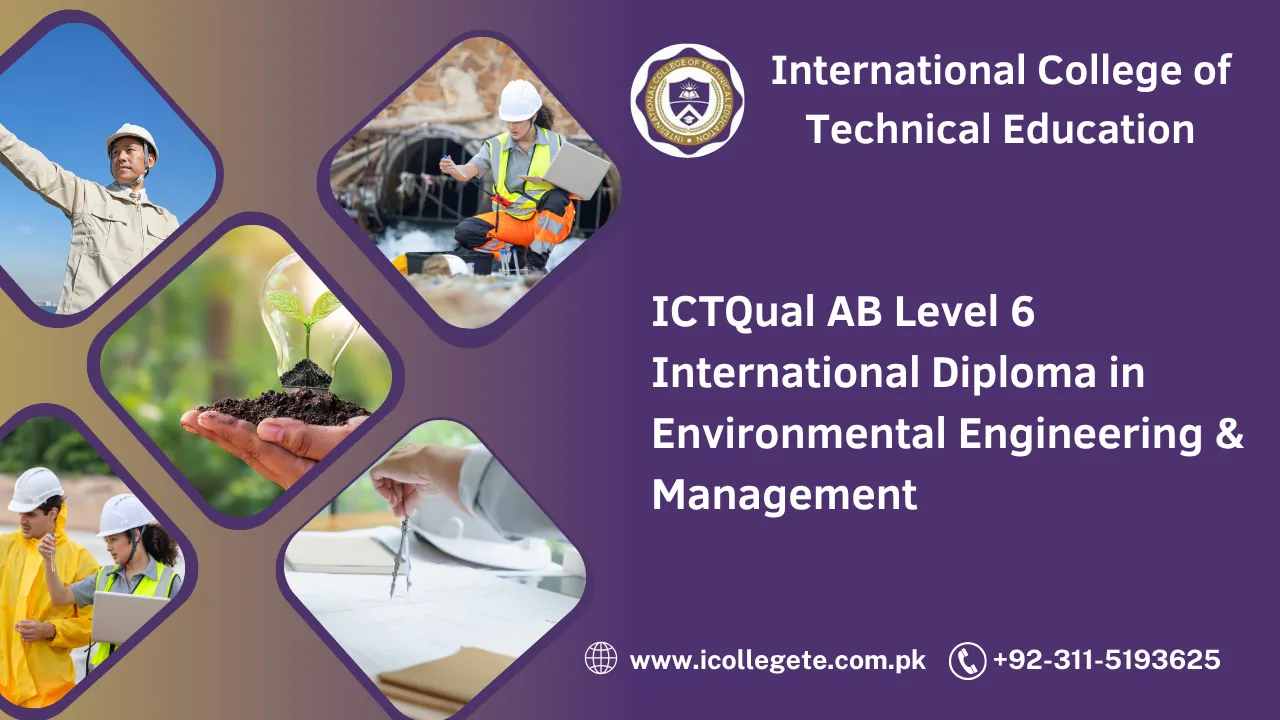
Sustainable development and effective environmental management are essential for businesses and communities in today’s rapidly changing world. The ICTQual AB Level 6 International Diploma in Environmental Engineering & Management is a comprehensive program designed to equip professionals with the technical, managerial, and strategic skills needed to address complex environmental challenges. ICTQual AB Level 6 International Diploma in Environmental Engineering & Management blends engineering principles with environmental management practices, preparing learners to implement sustainable solutions in diverse industries.
Participants will develop expertise in designing, implementing, and monitoring environmental projects, including water treatment, renewable energy integration, air quality management, and sustainable infrastructure development. The ICTQual AB Level 6 International Diploma in Environmental Engineering & Management also emphasizes leadership, strategic decision-making, and project management skills required to drive organizational sustainability initiatives.
The ICTQual AB Level 6 International Diploma in Environmental Engineering & Management focuses on providing a thorough understanding of environmental systems, pollution control, waste management, and sustainable resource utilization. Learners gain practical skills in environmental impact assessment, risk analysis, and compliance with national and international environmental regulations. Emphasis is placed on integrating modern engineering solutions with management strategies to minimize ecological footprints and promote sustainability across projects and organizations.
By completing the ICTQual AB Level 6 International Diploma in Environmental Engineering & Management, professionals enhance their career prospects in environmental consulting, sustainability management, regulatory compliance, and corporate social responsibility roles. This course prepares learners to lead environmental projects, develop innovative solutions for environmental challenges, and contribute to sustainable development goals, making it a vital qualification for anyone seeking a meaningful career in environmental engineering and management globally.
Course Overview: ICTQual AB Level 6 International Diploma in Environmental Engineering & Management
The ICTQual AB Level 6 International Diploma in Environmental Engineering & Management equips professionals with advanced knowledge and practical skills to address environmental challenges and promote sustainability. The ICTQual AB Level 6 International Diploma in Environmental Engineering & Management covers environmental engineering principles, pollution control, waste management, and sustainable resource utilization.
Learners gain expertise in environmental impact assessment, risk analysis, and compliance with international regulations. Emphasis is placed on integrating engineering solutions with management strategies to minimize ecological impact. Graduates are prepared for leadership roles in environmental consulting, sustainability management, regulatory compliance, and corporate social responsibility, making ICTQual AB Level 6 International Diploma in Environmental Engineering & Management ideal for professionals aiming to advance their careers while contributing to global environmental sustainability initiatives.
Course Study Units
This qualification, the ICTQual AB Level 6 International Diploma in Environmental Engineering & Management, consists of 36 mandatory units.
Year 1 – Foundation of Environmental Engineering & Management
- Principles of Environmental Engineering
- Introduction to Environmental Science and Sustainability
- Environmental Legislation and Regulatory Compliance
- Environmental Impact Assessment (EIA) Fundamentals
- Waste Management and Pollution Control
- Water Quality Management and Treatment
- Air Quality Monitoring and Control
- Soil and Groundwater Protection
- Renewable Energy Systems and Applications
- Occupational Health, Safety, and Environmental Awareness
- Communication and Reporting in Environmental Management
- Professional Ethics and Responsibility in Environmental Practice
Year 2 – Applied Environmental Engineering & Management
- Advanced Environmental Risk Assessment
- Industrial Wastewater and Effluent Management
- Solid and Hazardous Waste Engineering
- Environmental Monitoring and Audit Techniques
- Sustainable Resource Management and Conservation
- Climate Change Mitigation and Adaptation Strategies
- Environmental Modelling and Data Analysis
- Green Building and Sustainable Infrastructure
- Environmental Management in Manufacturing and Energy Sectors
- Behavioural and Organisational Approaches to Environmental Safety
- Digital Tools and Technologies in Environmental Engineering
- Research Methods and Environmental Project Planning
Year 3 – Strategic Environmental Leadership & Management
- Strategic Environmental Management and Governance
- Integrated Environmental Management Systems (ISO 14001, ISO 50001)
- Environmental Policy Development and Implementation
- Sustainability Leadership and Corporate Social Responsibility (CSR)
- Environmental Risk Management in Large-Scale Projects
- Renewable Energy Project Management
- International Environmental Standards and Best Practices
- Environmental Innovation and Emerging Technologies
- Environmental Crisis Management and Emergency Planning
- Advanced Occupational Health & Environmental Wellbeing Strategies
- Independent Research Project in Environmental Engineering
- Capstone Project: Applied Environmental Engineering & Management
Learning Outcomes: ICTQual AB Level 6 International Diploma in Environmental Engineering & Management
Understanding Environmental Engineering Principles
- Gain a comprehensive understanding of environmental systems and engineering fundamentals.
- Learn the principles of sustainable resource management and ecological balance.
- Explore air, water, and soil pollution control techniques.
- Understand environmental laws, regulations, and compliance frameworks.
- Study principles of waste management and recycling technologies.
- Develop knowledge of renewable energy integration in environmental projects.
- Understand the role of environmental engineering in sustainable development.
Environmental Impact Assessment and Risk Management
- Conduct environmental impact assessments (EIA) for various projects.
- Identify potential environmental risks and evaluate their consequences.
- Develop mitigation strategies to minimize ecological harm.
- Apply quantitative and qualitative methods for risk analysis.
- Monitor and assess environmental performance indicators.
- Ensure compliance with local and international environmental standards.
- Analyze and interpret environmental data for informed decision-making.
Sustainable Project Design and Management
- Plan, design, and implement environmentally sustainable projects.
- Integrate engineering solutions with management practices for efficiency.
- Develop project timelines, budgets, and resource allocation strategies.
- Ensure adherence to environmental policies and safety standards.
- Monitor project progress and sustainability outcomes.
- Implement best practices for sustainable infrastructure development.
- Optimize project processes to reduce environmental impact.
Pollution Control and Waste Management
- Design systems for controlling air, water, and soil pollution.
- Implement waste treatment and disposal strategies.
- Promote recycling and resource recovery initiatives.
- Evaluate environmental hazards associated with industrial processes.
- Develop operational procedures for pollution reduction.
- Monitor compliance with environmental regulations.
- Apply innovative technologies to minimize environmental footprint.
Leadership and Strategic Environmental Management
- Lead teams in implementing environmental projects and policies.
- Develop organizational strategies for sustainability and compliance.
- Promote a culture of environmental responsibility within organizations.
- Make strategic decisions based on environmental and economic considerations.
- Coordinate cross-functional teams for environmental initiatives.
- Mentor staff on sustainable practices and compliance standards.
- Evaluate long-term environmental performance and improvement plans.
Innovation and Technology in Environmental Management
- Explore modern technologies for monitoring and managing environmental systems.
- Apply digital tools for environmental data collection and analysis.
- Implement innovative solutions for pollution control and sustainability.
- Integrate renewable energy and clean technologies into projects.
- Stay updated with emerging environmental engineering trends.
- Evaluate the effectiveness of technological interventions in sustainability.
- Promote innovative practices for reducing ecological impacts.
Compliance, Policy, and Regulatory Frameworks
- Understand national and international environmental regulations.
- Ensure organizational compliance with legal and policy requirements.
- Develop internal policies aligned with environmental standards.
- Conduct audits to assess adherence to regulatory frameworks.
- Advise organizations on best practices for sustainable operations.
- Maintain documentation and reporting for regulatory purposes.
- Interpret evolving environmental laws for organizational strategy.
Entry Requirements for ICTQual AB Level 6 International Diploma in Environmental Engineering & Management
To enroll in this course, applicants must meet the following criteria:
1. Age Requirement
- Minimum age of 18 years at the time of enrollment.
- Suitable for both young professionals and mature learners.
- Ability to manage academic and professional commitments simultaneously.
- Preparedness to undertake Level 6 study standards.
- Commitment to successfully complete theoretical and practical modules.
- Motivation to engage in independent and collaborative learning.
- Capacity to participate in environmental fieldwork and project assignments.
- Legal eligibility to study in the country of enrollment.
2. Educational Requirements
- Level 5 Diploma or equivalent in Environmental Engineering, Environmental Science, Civil Engineering, or related disciplines.
- Bachelor’s degree holders in environmental or engineering fields are highly encouraged.
- Foundational understanding of sustainability and environmental management concepts.
- Basic knowledge of environmental regulations, pollution control, and waste management.
- Analytical and problem-solving skills for engineering and environmental tasks.
- Ability to interpret technical documentation, environmental reports, and data.
- Preparedness to apply theoretical knowledge to practical environmental solutions.
- Understanding of renewable energy and sustainable infrastructure principles.
3. Work Experience Requirements
- Minimum 2–3 years of professional experience in environmental engineering, sustainability management, or related fields.
- Experience in conducting environmental assessments, audits, or compliance projects is advantageous.
- Familiarity with environmental management systems and regulatory standards.
- Proven ability to work within multidisciplinary teams.
- Knowledge of environmental monitoring tools and reporting software.
- Exposure to sustainable project implementation and lifecycle assessments.
- Ability to manage practical environmental tasks and field assignments.
- Capability to develop strategies for pollution prevention and resource optimization.
4. Additional Requirements
- Proficiency in English for academic, technical, and professional communication.
- Basic computer literacy, including MS Office and environmental software tools.
- Commitment to ethical practices and sustainable project implementation.
- Willingness to participate in case studies, assignments, and assessments.
- Strong interpersonal and communication skills for team collaboration.
- Motivation for continuous professional development in environmental engineering.
- Awareness of global sustainability goals and frameworks.
- Readiness to integrate theoretical knowledge into practical environmental challenges.
Course Benefits of ICTQual AB Level 6 International Diploma in Environmental Engineering & Management
1. Advanced Technical Knowledge
- Gain in-depth understanding of environmental engineering principles and management strategies.
- Learn sustainable resource management, pollution control, and waste treatment methods.
- Develop expertise in environmental impact assessment and risk analysis.
- Understand national and international environmental regulations and compliance standards.
- Acquire skills in renewable energy integration and sustainable infrastructure design.
- Enhance ability to solve complex environmental challenges practically.
- Apply modern tools and techniques for environmental monitoring and assessment.
2. Career Advancement Opportunities
- Prepare for leadership roles such as Environmental Engineer, Sustainability Manager, or Environmental Consultant.
- Enhance employability in industries including manufacturing, construction, energy, and government agencies.
- Strengthen professional credibility with an internationally recognized qualification.
- Access opportunities in project management, regulatory compliance, and corporate sustainability.
- Improve potential for promotions and higher responsibility positions.
- Position yourself as an expert in environmental engineering and management globally.
- Open pathways to senior management and consultancy roles in environmental projects.
3. Practical and Managerial Skills
- Gain hands-on experience in designing and implementing sustainable projects.
- Develop project management and strategic planning capabilities for environmental initiatives.
- Learn to monitor environmental performance indicators and optimize processes.
- Conduct audits, inspections, and compliance assessments effectively.
- Manage budgets, timelines, and resources for environmental projects.
- Enhance problem-solving and critical thinking skills in real-world scenarios.
- Apply innovative solutions for energy efficiency and pollution reduction.
4. Leadership and Strategic Competence
- Lead environmental teams and sustainability projects successfully.
- Develop strategic plans aligned with organizational sustainability goals.
- Promote a culture of environmental responsibility and ethical practices.
- Coordinate cross-functional teams for effective project execution.
- Make informed decisions based on technical, environmental, and economic considerations.
- Mentor and train staff on environmental management best practices.
- Evaluate long-term environmental performance and improvement plans.
5. Global Recognition and Professional Growth
- Achieve an internationally recognized Level 6 diploma in Environmental Engineering & Management.
- Boost professional profile for local and global career opportunities.
- Stay updated with emerging technologies and environmental management trends.
- Access networking opportunities with industry experts and environmental professionals.
- Align professional knowledge with global sustainability frameworks.
- Prepare for further academic progression or specialized certifications.
- Contribute effectively to organizational sustainability and environmental initiatives.
Why Someone Should Choose the ICTQual AB Level 6 International Diploma in Environmental Engineering & Management
- Gain advanced knowledge in environmental engineering and sustainable management practices.
- Develop practical skills in pollution control, waste management, and resource optimization.
- Learn to conduct environmental impact assessments and implement mitigation strategies.
- Acquire expertise in complying with national and international environmental regulations.
- Enhance career prospects in environmental consulting, sustainability, and regulatory roles.
- Build leadership and project management skills for implementing environmental initiatives.
- Gain exposure to modern tools, technologies, and innovative solutions in environmental engineering.
- Strengthen problem-solving and decision-making abilities for complex environmental challenges.
- Improve employability in diverse industries including energy, construction, manufacturing, and government.
- Access an internationally recognized qualification to validate professional competency.
- Prepare for roles that contribute to organizational sustainability and global environmental goals.
- Stay updated with emerging trends in environmental technology and management practices.
- Develop skills for strategic planning, monitoring, and reporting of environmental projects.
- Enhance credibility and recognition as a professional in environmental engineering and management.
- Open pathways for further academic progression or specialized certifications in sustainability and environmental management.
Who Should Enroll in the ICTQual AB Level 6 International Diploma in Environmental Engineering & Management
- Environmental engineers seeking to enhance technical and managerial skills.
- Professionals working in sustainability, environmental consulting, or regulatory compliance.
- Project managers responsible for implementing eco-friendly and sustainable initiatives.
- Civil, chemical, or mechanical engineers aiming to specialize in environmental projects.
- Individuals pursuing careers in renewable energy, pollution control, or waste management.
- HSE (Health, Safety & Environment) officers and coordinators seeking advanced knowledge.
- Graduates in environmental science, engineering, or related disciplines aiming for professional growth.
- Consultants and analysts providing advice on environmental impact and sustainability strategies.
- Professionals involved in corporate social responsibility (CSR) programs and sustainability initiatives.
- Government officials and policy makers focused on environmental regulations and compliance.
- Academics and researchers seeking advanced understanding in environmental engineering and management.
- Professionals planning to lead projects that align with global sustainability goals.
- Individuals interested in integrating modern technology and innovation into environmental solutions.
- Professionals aiming to gain internationally recognized certification to boost credibility.
- Team leaders and managers responsible for environmental performance and project monitoring.
Future Progression for ICTQual AB Level 6 International Diploma in Environmental Engineering & Management
1. Environmental Engineer
- Design and implement sustainable environmental solutions.
- Monitor pollution control, waste management, and resource efficiency.
- Conduct environmental assessments and audits.
- Develop projects aligned with sustainability goals.
- Collaborate with multidisciplinary teams on eco-friendly initiatives.
- Ensure compliance with environmental regulations.
- Lead technical operations for environmental projects.
- Contribute to innovative engineering solutions for sustainability.
2. Sustainability Manager
- Oversee organizational sustainability programs.
- Develop strategic plans for environmental compliance and resource efficiency.
- Lead projects promoting renewable energy and eco-friendly practices.
- Monitor and report on sustainability metrics.
- Implement corporate social responsibility initiatives.
- Guide teams on environmental performance improvement.
- Advise management on sustainable practices.
- Ensure adherence to global sustainability standards.
3. Environmental Consultant
- Provide expert advice on environmental management and compliance.
- Conduct environmental audits and impact assessments.
- Develop mitigation strategies for pollution and resource use.
- Support organizations in meeting regulatory requirements.
- Train staff on sustainable practices and environmental policies.
- Recommend innovative solutions for environmental challenges.
- Assist in implementing environmental management systems.
- Collaborate with clients on sustainability projects.
4. HSE (Health, Safety & Environment) Coordinator
- Coordinate health, safety, and environmental programs.
- Monitor workplace compliance with environmental and safety regulations.
- Conduct risk assessments and inspections.
- Implement sustainability initiatives within operations.
- Train employees on environmental standards and safety practices.
- Maintain documentation and reporting for regulatory compliance.
- Support project planning with environmental considerations.
- Collaborate with management to improve environmental performance.
5. Project Manager – Environmental Projects
- Lead environmental engineering and sustainability projects.
- Develop project timelines, budgets, and resources.
- Ensure compliance with environmental and safety standards.
- Monitor project progress and outcomes.
- Apply risk management strategies to minimize environmental impact.
- Coordinate cross-functional teams for project delivery.
- Implement innovative solutions for sustainability challenges.
- Report on project performance and improvement strategies.
6. Environmental Policy Advisor
- Advise governments or organizations on environmental regulations and standards.
- Develop policies supporting sustainable development.
- Conduct research and analysis for regulatory compliance.
- Recommend strategies to reduce environmental risks.
- Support implementation of sustainability frameworks.
- Monitor policy effectiveness and outcomes.
- Collaborate with stakeholders on environmental initiatives.
- Ensure alignment with global environmental and sustainability goals.
7. Renewable Energy Project Specialist
- Design and implement renewable energy solutions within projects.
- Optimize energy efficiency in industrial and infrastructure projects.
- Evaluate environmental impact of energy systems.
- Integrate clean technologies with sustainable practices.
- Monitor performance and report on energy efficiency.
- Advise on environmental compliance in energy projects.
- Support project planning for renewable initiatives.
- Promote innovation in sustainable energy solutions.
8. Further Academic Progression
- Pursue Level 7 Diplomas or Postgraduate Programs in Environmental Engineering, Sustainability, or Management.
- Specialize in advanced environmental policy, renewable energy, or climate change.
- Access research, teaching, or consultancy opportunities in environmental sectors.
- Enhance knowledge for senior leadership or technical expert roles.
- Gain expertise in regulatory compliance and strategic sustainability planning.
- Strengthen career prospects in global environmental and sustainability initiatives.
- Prepare for international certifications and advanced professional recognition.
- Contribute to innovative and sustainable environmental solutions globally.