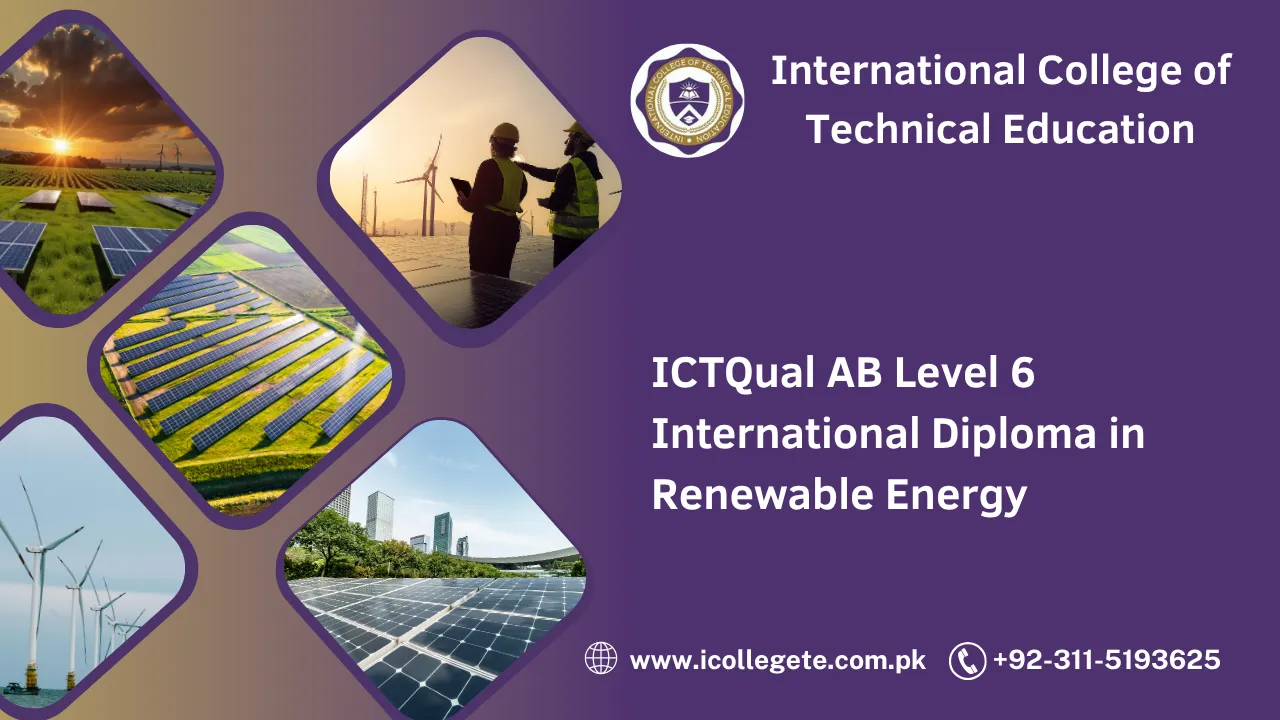
The ICTQual AB Level 6 International Diploma in Renewable Energy is an advanced professional qualification designed to provide learners with comprehensive knowledge and practical expertise in renewable energy systems, technologies, and sustainable power generation. ICTQual AB Level 6 International Diploma in Renewable Energy focuses on developing a deep understanding of renewable energy sources such as solar, wind, hydro, geothermal, and biomass, as well as their integration into modern energy systems. ICTQual AB Level 6 International Diploma in Renewable Energy aims to prepare learners for leadership and technical roles in the rapidly evolving global renewable energy industry.
The ICTQual AB Level 6 International Diploma in Renewable Energy combines engineering principles, environmental science, and energy management practices to help students analyze, design, and implement renewable energy solutions. Learners explore how renewable technologies can meet global energy demands while minimizing environmental impact. The ICTQual AB Level 6 International Diploma in Renewable Energy equips participants with the technical proficiency, analytical capability, and strategic insight required to drive sustainable energy transformation across various sectors.
Through project-based learning, case studies, and industry-aligned coursework, students gain exposure to practical applications of renewable energy technologies. The course covers system design, performance analysis, energy policy, and sustainability frameworks. ICTQual AB Level 6 International Diploma in Renewable Energy also emphasizes the importance of innovation, digitalization, and smart grid integration in shaping the future of renewable power generation.
Graduates of this diploma are well-prepared for careers in renewable energy engineering, sustainability consulting, energy auditing, and environmental management. The ICTQual AB Level 6 International Diploma in Renewable Energy serves as a gateway to advanced studies and global opportunities in the clean energy sector, empowering learners to contribute effectively to global sustainability and climate goals.
Course Overview
The ICTQual AB Level 6 International Diploma in Renewable Energy provides learners with advanced training in renewable energy principles, system design, and sustainable energy management. It integrates scientific understanding, engineering application, and policy analysis to prepare professionals for the challenges and opportunities within the renewable energy industry. The program emphasizes efficiency, innovation, and environmental responsibility in all aspects of energy production and use.
Course Study Units
This qualification, the ICTQual AB Level 6 International Diploma in Renewable Energy, consists of 36 mandatory units.
Year 1 – Foundation in Renewable Energy
- Principles of Renewable Energy Systems
- Introduction to Sustainable Energy Technologies
- Solar Energy Fundamentals
- Wind Energy Basics and Applications
- Hydroelectric Power Principles
- Biomass and Bioenergy Fundamentals
- Energy Conversion and Storage Basics
- Electrical and Mechanical Principles for Decarbonised Energy
- Health, Safety, and Environmental Awareness
- Laboratory Techniques in Renewable Energy
- Technical Report Writing
- Introduction to Renewable Energy Simulation Software
Year 2 – Intermediate Renewable Energy
- Advanced Solar Photovoltaic Systems
- Wind Turbine Design and Operations
- Hydropower Plant Design and Management
- Biomass Conversion and Biofuel Production
- Energy Storage Systems and Technologies
- Smart Grids and Energy Distribution
- Process Control and Automation in Renewable Energy
- Energy Efficiency and Management Strategies
- Environmental Impact Assessment and Sustainability
- Quality Control and Assurance in Energy Systems
- Project Planning and Technical Communication
- Data Analysis for Renewable Energy Projects
Year 3 – Advanced Renewable Energy
- Advanced Energy Systems Optimisation and Troubleshooting
- Energy Project Management
- Emerging Technologies in Solar and Wind Energy
- Advanced Energy Storage and Battery Technologies
- Smart Grid Integration and Management
- Sustainability and Cleaner Energy Practices
- Risk Assessment and Hazard Analysis in Energy Projects
- Advanced Laboratory Techniques and Field Testing
- Supply Chain and Logistics in Renewable Energy
- Capstone Project in Future Energy Technologies
- Professional Development and Leadership in Energy
- Strategic Decision-Making in Renewable Energy Operations
Course Learning Outcomes
Understanding Renewable Energy Principles
- Gain a comprehensive understanding of the scientific, engineering, and environmental principles that govern renewable energy systems.
- Explore the fundamentals of energy conversion processes, including solar radiation, wind flow, hydropower generation, and biomass energy.
- Study the characteristics and limitations of various renewable energy sources and how they compare to fossil fuel systems.
- Learn about the global demand for renewable energy and its role in reducing greenhouse gas emissions.
- Understand the physics and chemistry underlying energy production and storage in renewable systems.
- Analyze the relationship between renewable energy technologies and sustainable development goals.
- Develop a foundational understanding of renewable energy terminology, system components, and global market trends.
Design and Analysis of Renewable Energy Projects
- Develop the ability to plan, design, and evaluate renewable energy projects, including solar PV systems, wind farms, hydroelectric plants, and bioenergy systems.
- Use engineering design methodologies to optimize project efficiency and sustainability.
- Perform resource assessments using meteorological and geospatial data for site selection and feasibility.
- Learn about design standards, codes, and best practices for renewable system installations.
- Apply computational design tools for system sizing, configuration, and cost estimation.
- Understand the environmental and social impacts of renewable project design decisions.
- Create comprehensive project proposals that balance performance, cost, and sustainability.
Performance Evaluation and System Optimization
- Learn techniques for monitoring, measuring, and evaluating renewable system performance.
- Use analytical tools and software to interpret operational data and identify inefficiencies.
- Understand the key performance indicators (KPIs) for solar, wind, hydro, and biomass energy systems.
- Implement system optimization methods to enhance output and reliability.
- Develop troubleshooting strategies for common technical and operational challenges.
- Evaluate economic performance through life-cycle costing and payback period analysis.
- Apply predictive maintenance and performance forecasting to maximize energy production.
Application of Modern Energy Simulation Tools
- Gain proficiency in using simulation tools like HOMER, RETScreen, and PVsyst for project analysis and optimization.
- Conduct technical and economic feasibility studies for renewable projects.
- Model different energy generation scenarios to predict performance under varying environmental conditions.
- Analyze the interaction between multiple renewable sources in hybrid energy systems.
- Simulate energy storage systems and grid integration using advanced modeling software.
- Explore digital twins and real-time simulation for system testing and performance validation.
- Apply computational methods to improve project design accuracy and efficiency.
Integration with Existing Energy Infrastructure
- Understand how renewable energy systems can be integrated with conventional grid infrastructures.
- Study smart grid technologies, distributed generation, and microgrid design concepts.
- Analyze challenges related to grid stability, intermittency, and load balancing.
- Learn about energy storage technologies that enable seamless integration and reliability.
- Evaluate hybrid systems that combine renewable and non-renewable sources for optimized performance.
- Explore policy and regulatory frameworks for grid interconnection of renewable systems.
- Investigate the role of digital control systems and IoT in modern power integration.
Environmental Impact and Sustainability Assessment
- Conduct environmental impact assessments (EIA) to identify and mitigate potential ecological effects.
- Learn to calculate and interpret carbon footprints and lifecycle emissions of renewable energy projects.
- Evaluate water usage, land requirements, and biodiversity impacts of renewable installations.
- Apply sustainability assessment frameworks to ensure long-term environmental protection.
- Study global environmental standards and certifications related to renewable energy projects.
- Integrate circular economy principles in renewable energy system design and operation.
- Assess socio-economic benefits of renewable projects for communities and local economies.
Project Planning and Management
- Develop essential project management skills including scheduling, budgeting, and cost control.
- Learn to manage multidisciplinary teams in renewable energy projects.
- Understand project lifecycle stages from concept development to commissioning and maintenance.
- Apply risk assessment and mitigation techniques specific to energy projects.
- Study procurement, logistics, and supply chain management in renewable energy contexts.
- Ensure compliance with industry regulations, safety protocols, and quality standards.
- Utilize project management software to track milestones and deliverables efficiently.
Health, Safety, and Environmental (HSE) Standards
- Apply international HSE regulations and standards in renewable energy operations.
- Identify potential hazards in installation, maintenance, and operation of renewable systems.
- Learn to implement safety management systems and incident prevention programs.
- Promote a culture of safety and environmental responsibility within renewable projects.
- Develop emergency response and risk management strategies for on-site safety.
- Conduct safety audits and inspections to ensure compliance with occupational safety standards.
- Understand environmental protection laws and their application in renewable projects.
Energy Efficiency and Carbon Reduction Strategies
- Explore methods to enhance energy efficiency in industrial, commercial, and residential settings.
- Learn to design and implement carbon reduction strategies for sustainable energy projects.
- Analyze building energy performance and implement green building practices.
- Understand global carbon markets, emissions trading systems, and offset programs.
- Promote energy conservation practices through behavioral and technological interventions.
- Study renewable integration as part of net-zero carbon initiatives.
- Evaluate economic incentives and policies promoting energy efficiency and carbon neutrality.
Energy Policy and Global Sustainability Frameworks
- Study national and international renewable energy policies, strategies, and legal frameworks.
- Understand the role of government regulations and incentives in promoting renewable development.
- Examine international agreements like the Paris Accord and UN Sustainable Development Goals (SDGs).
- Learn about energy economics and the financial aspects of renewable markets.
- Evaluate the geopolitical implications of transitioning to renewable energy sources.
- Study policy challenges related to renewable energy adoption in developing countries.
- Explore frameworks for sustainable and equitable access to clean energy.
Innovation and Digital Transformation in Renewable Energy
- Explore how AI, IoT, and blockchain technologies are transforming renewable energy management.
- Learn to apply data analytics and automation for predictive maintenance and performance optimization.
- Study the role of digital twins in system monitoring and efficiency improvement.
- Promote innovation and creativity in developing next-generation renewable technologies.
- Understand how smart technologies contribute to energy decentralization and resilience.
- Investigate trends in digital energy platforms, peer-to-peer energy trading, and virtual power plants.
- Encourage sustainable innovation through research, collaboration, and technological adoption.
Leadership and Strategic Thinking in Energy Transition
- Develop leadership and managerial skills to guide renewable energy initiatives.
- Enhance decision-making and problem-solving abilities in complex project environments.
- Cultivate strategic thinking for planning large-scale sustainable energy transitions.
- Learn effective communication and stakeholder engagement strategies for energy projects.
- Build competencies in ethical leadership and sustainability-driven management.
- Understand the global energy transition landscape and the role of leadership in achieving it.
- Foster innovation-driven leadership to navigate challenges in the evolving energy sector.
Entry Requirements for this Course
Educational Qualification
- Applicants must hold a Level 5 Diploma or an equivalent qualification in engineering, science, environmental studies, or any related technical discipline.
- Candidates with qualifications in mechanical, electrical, civil, or energy-related fields are strongly encouraged to apply.
Professional Experience
- A minimum of 2 to 3 years of relevant industry experience in energy, power, utilities, or sustainability sectors is preferred.
- Experience in renewable energy projects, system maintenance, or energy auditing will be an added advantage.
Age Requirement
- Applicants should be at least 20 years of age or above at the time of enrollment.
- Mature candidates with extensive work experience but limited formal education may also be considered under the Recognition of Prior Learning (RPL) route.
English Language Proficiency
- Since the program is delivered in English, proficiency in written and spoken English is mandatory.
- Applicants may be required to provide proof of English competence through prior education, professional communication, or standardized testing (e.g., IELTS or equivalent).
Foundational Knowledge
- Candidates must demonstrate a basic understanding of energy systems, environmental science, and sustainability concepts.
- Familiarity with engineering fundamentals and computer literacy is recommended for optimal learning outcomes.
Additional Requirements
- Submission of academic transcripts, updated CV, and proof of work experience is required for admission verification.
- Candidates should possess a strong motivation for career growth in renewable energy and sustainable technologies.
- A personal interview or statement of purpose may be requested to assess applicant suitability for the program.
Course Benefits
The ICTQual AB Level 6 International Diploma in Renewable Energy offers learners an advanced understanding of sustainable power generation, energy efficiency, and global environmental management. This program is designed for professionals and aspiring engineers who aim to lead in the rapidly evolving clean energy sector. It blends theoretical knowledge with practical training to prepare students for the challenges and opportunities within the renewable energy industry. Graduates of this internationally recognized qualification develop the technical expertise, leadership capabilities, and strategic insight needed to contribute effectively to the global energy transition.
Internationally Recognized Qualification
- The ICTQual AB Level 6 International Diploma in Renewable Energy is a globally accredited qualification recognized by international energy and education bodies.
- It provides a competitive edge for professionals seeking careers in renewable and sustainable energy sectors worldwide.
- Employers and institutions acknowledge the qualification as a mark of excellence in technical and managerial competence.
- The program’s global recognition enables graduates to work across diverse geographical and industrial environments.
- It serves as a foundation for further academic progression or international certification in renewable energy management.
- This qualification reinforces professional credibility and enhances opportunities in the global job market.
Development of Technical and Managerial Competence
- The course equips learners with both technical and managerial skills required to plan, design, and implement renewable energy projects.
- Students gain hands-on expertise in solar, wind, hydro, and bioenergy systems while developing managerial insight for project oversight.
- It strengthens understanding of engineering concepts, energy economics, and sustainability management.
- Learners acquire leadership skills for supervising multidisciplinary teams and executing complex energy initiatives.
- The program integrates technical innovation with business management principles for comprehensive professional growth.
- Graduates become capable of making strategic decisions to improve energy efficiency and sustainability outcomes.
Practical Skills in System Design and Energy Management
- Learners gain applied knowledge in designing, analyzing, and optimizing renewable energy systems.
- The course provides training in modern energy management practices, system operation, and maintenance.
- Participants work on case studies and simulations that reflect real-world energy challenges.
- It develops analytical and problem-solving skills necessary for designing efficient and sustainable energy solutions.
- Students learn to manage renewable projects from concept to completion using contemporary tools and techniques.
- Graduates emerge as competent professionals ready to implement practical, sustainable energy systems.
Enhanced Employability in Global Energy Sectors
- The diploma significantly enhances career prospects in international renewable and sustainable energy industries.
- It prepares learners for roles such as renewable energy engineer, project manager, sustainability consultant, or policy advisor.
- Graduates are well-positioned for employment in utilities, research institutions, and environmental organizations.
- The qualification supports mobility across global markets where renewable energy expertise is in high demand.
- It enhances professional visibility and creates opportunities in both private and government sectors.
- The program bridges academic excellence with industry relevance to strengthen employability.
Promotion of Innovation and Problem-Solving Skills
- The course encourages innovative thinking to address complex renewable energy challenges.
- Learners are trained to develop creative and efficient solutions using modern technologies and analytical tools.
- It nurtures a mindset focused on continuous improvement, research, and system innovation.
- Students explore the role of emerging technologies such as AI and data analytics in renewable energy systems.
- The program promotes intellectual curiosity and critical analysis for energy system advancement.
- Graduates are capable of driving innovation and sustainability in evolving energy environments.
Understanding of Global Sustainability and Energy Policies
- Students gain a solid understanding of international sustainability frameworks and renewable energy regulations.
- The curriculum connects technical expertise with global policy and environmental governance.
- Learners study the role of renewable energy in achieving the UN Sustainable Development Goals (SDGs).
- It fosters awareness of economic, social, and political factors shaping the global energy transition.
- The course highlights policy challenges and opportunities in renewable energy development worldwide.
- Graduates become informed professionals capable of contributing to sustainable policy implementation.
Exposure to Emerging Technologies and Smart Grid Solutions
- The diploma introduces learners to advanced technologies, including smart grids, hybrid systems, and energy storage solutions.
- It provides insight into digital energy transformation through automation, IoT, and data-driven decision-making.
- Students understand how modern technology enhances energy reliability, efficiency, and flexibility.
- The course prepares learners for the integration of renewable technologies within existing power infrastructures.
- It fosters awareness of trends in decentralized and digitalized energy systems.
- Graduates are prepared to adapt to future innovations in renewable energy technology.
Leadership in Energy Transition and Sustainability
- The program develops leadership and strategic management skills for guiding sustainable energy projects.
- Learners are trained to lead teams, manage resources, and make impactful decisions in renewable energy operations.
- It promotes ethical leadership focused on social responsibility and environmental stewardship.
- Students gain insight into global sustainability leadership and energy governance.
- The course enhances capacity to drive institutional and national transitions toward cleaner energy.
- Graduates are equipped to assume leadership roles in energy planning and sustainability programs.
Flexible Learning for Professionals and Engineers
- The program offers a flexible study format suitable for working professionals, engineers, and technicians.
- Learners can pursue their studies alongside work commitments through online or blended delivery modes.
- The curriculum allows for self-paced progression while maintaining rigorous academic standards.
- It provides accessible and adaptable learning tailored to international learners.
- The structure supports continued professional development without disrupting employment.
- Participants benefit from a modern learning experience combining theory with practical application.
Career Advancement in Public and Private Sectors
- The diploma opens opportunities for senior and managerial positions in the global renewable energy industry.
- Graduates can work in government agencies, multinational corporations, and energy consultancy firms.
- It supports advancement to supervisory and strategic roles within sustainability and energy divisions.
- The qualification serves as a bridge to higher academic levels such as Level 7 Diplomas or Master’s degrees.
- It enhances prospects for international career growth and professional recognition.
- Employers value the multidisciplinary knowledge and leadership capabilities developed through the program.
Promotion of Environmentally Responsible Energy Practices
- The course emphasizes sustainability and the responsible use of natural resources.
- Students learn to adopt and promote energy-efficient and environmentally sound practices.
- It encourages the design of low-emission, high-efficiency renewable systems.
- Learners understand the importance of environmental stewardship in energy operations.
- The program instills values of conservation, innovation, and sustainability.
- Graduates become advocates for green energy practices and global environmental responsibility.
Why Someone Should Choose This Course
- Aligned with international renewable energy standards and practices
- Combines theoretical knowledge with practical, real-world applications
- Prepares learners for careers in solar, wind, hydro, and sustainable energy fields
- Focuses on energy efficiency, environmental management, and innovation
- Enhances competitiveness in the fast-growing renewable energy job market
- Equips learners to lead sustainable energy transformation initiatives
- Offers progression opportunities to higher-level academic and professional programs
- Suitable for professionals seeking to transition from traditional energy sectors
- Supports the global shift towards clean, reliable, and affordable energy
Who Can Enroll in This Course
The ICTQual AB Level 6 International Diploma in Renewable Energy is designed for professionals, engineers, and learners aiming to specialize in renewable energy systems and sustainability. The course is ideal for individuals seeking to upgrade their technical and managerial skills in the clean energy sector. The following groups are eligible to enroll:
- Engineering graduates or diploma holders in electrical, mechanical, civil, or energy-related fields.
- Professionals currently working in the energy, power generation, or environmental sectors.
- Technicians and supervisors seeking to transition into renewable energy system design and management.
- Project managers and consultants involved in sustainable development or energy efficiency projects.
- Individuals with a background in environmental science or sustainability studies.
- Entrepreneurs and innovators aiming to start businesses in the renewable and clean energy industries.
- Government and NGO employees engaged in energy policy, climate change, or environmental programs.
- Academics, researchers, and trainers looking to expand their expertise in renewable energy technologies.
- International students aspiring to build a career in the global renewable energy market.
- Professionals seeking a career change towards green and sustainable energy fields.
- Individuals interested in contributing to carbon reduction, sustainability, and energy transition initiatives.
- Anyone passionate about clean energy solutions and sustainable environmental practices.
Future Progression for This Course
The ICTQual AB Level 6 International Diploma in Renewable Energy opens diverse career and academic advancement opportunities across the global energy and sustainability sectors. Graduates can pursue higher qualifications or professional roles that contribute to the transition toward a cleaner, more sustainable energy future. Below are the key future progression pathways:
- Progression to higher-level qualifications such as a Level 7 or postgraduate diploma in Energy Management, Sustainability, or Environmental Engineering.
- Eligibility to pursue a master’s degree in Renewable Energy, Energy Systems, or Sustainable Development at international universities.
- Advancement into senior technical or managerial positions within renewable energy companies, power utilities, and engineering consultancies.
- Opportunities to work as Renewable Energy Engineers, Energy Auditors, Project Managers, or Sustainability Specialists.
- Pathways to professional memberships or certifications in international energy and sustainability organizations.
- Involvement in research and development (R&D) projects focused on innovative renewable energy technologies.
- Ability to lead large-scale renewable energy and sustainability projects in both public and private sectors.
- Entrepreneurship opportunities in solar, wind, biomass, or hybrid energy system businesses.
- Potential to work with global environmental agencies, NGOs, and development organizations.
- Access to consulting roles in energy policy, carbon management, and green infrastructure development.
- Participation in international collaborations focused on climate change mitigation and energy transition strategies.
- Opportunity to contribute to the United Nations Sustainable Development Goals (SDGs) related to clean energy and sustainability.
- Development of a lifelong career pathway within the rapidly growing renewable and sustainable energy industry.