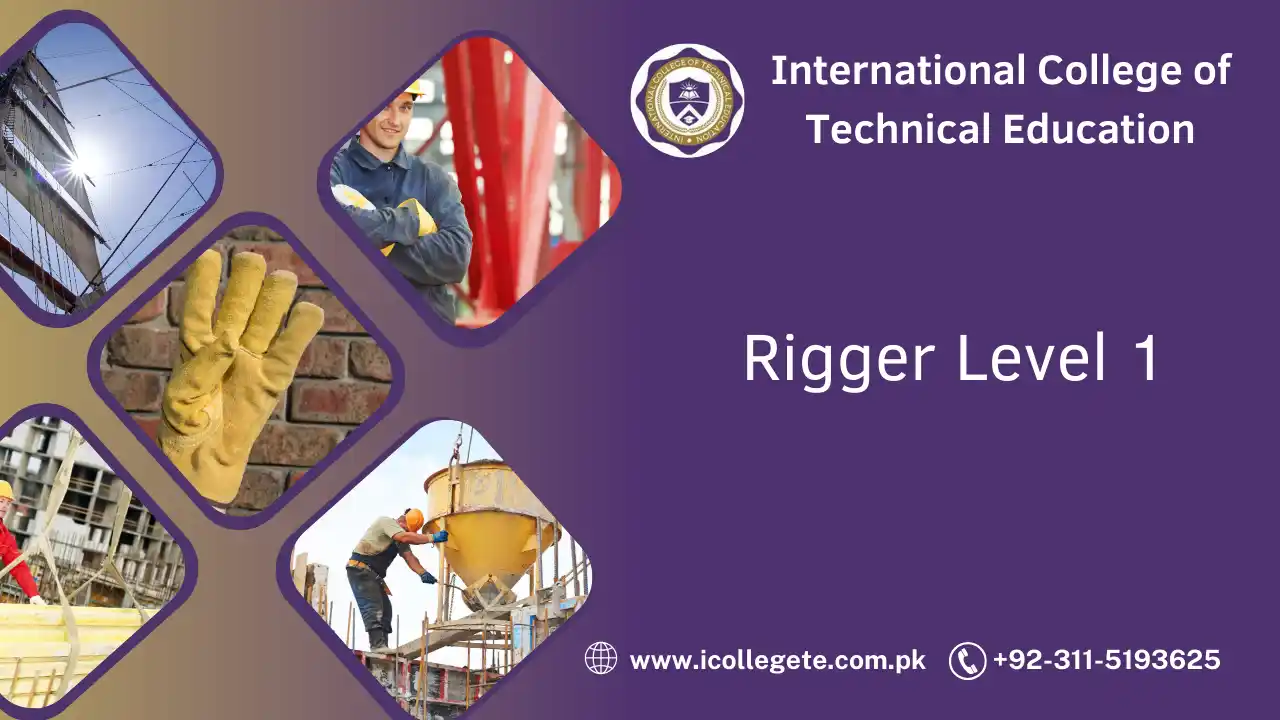
The role of a rigger is essential in various industries, particularly in construction, oil, gas, and manufacturing, where heavy equipment and materials need to be moved and lifted safely. The Rigger Level 1 Course in Lahore is designed to provide individuals with the fundamental skills and knowledge required to safely and effectively carry out rigging tasks. This introductory course covers essential rigging practices, safety measures, and equipment handling, providing a strong foundation for anyone looking to begin a career in rigging or enhance their current skillset.
The Rigger Level 1 Course is an entry-level training program aimed at individuals with little to no prior experience in rigging. It covers the basic principles of rigging, including how to properly handle rigging tools, select appropriate lifting equipment, and execute safe lifting operations. The course focuses on safety, equipment usage, and the necessary techniques for rigging materials at height or in challenging environments. Upon completion, participants will have the basic skills required to assist in rigging operations on construction sites, manufacturing facilities, or any project that involves lifting and moving heavy loads.
Course Overview
This course provides both theoretical and practical knowledge to ensure participants understand the core concepts of rigging. It covers the types of rigging equipment, proper lifting techniques, the role of a rigger, and the importance of safety in rigging operations. The course also emphasizes understanding load capacities, risk assessments, and best practices to avoid accidents and ensure the safe movement of heavy materials.
The Rigger Level 1 Course is structured to provide foundational knowledge, making it suitable for those new to the field of rigging. By the end of the course, participants will have the skills necessary to work as riggers under the supervision of senior rigging professionals.
Study Units
The Rigger Level 1 Course typically includes the following study units:
- Introduction to Rigging: An overview of rigging operations, terminology, and safety guidelines.
- Types of Rigging Equipment: Study of common rigging equipment such as slings, hoists, pulleys, and cranes, and understanding their uses.
- Basic Lifting Techniques: Learning how to select the correct lifting equipment and perform safe lifts using slings, ropes, and other tools.
- Rigging Standards and Safety: Overview of local and international rigging safety standards, including OSHA guidelines, and how to work safely in a rigging environment.
- Load Calculations and Weight Distribution: Understanding how to calculate the weight of loads and the importance of even load distribution to ensure safety.
- Inspection of Rigging Equipment: Learning how to inspect rigging equipment for wear and tear, and how to maintain it for optimal performance.
- Basic Rigging Practices and Techniques: Practical exercises in the proper use of rigging equipment, including securing loads, knot tying, and ensuring the stability of lifted materials.
- Emergency Procedures and Safety Protocols: Understanding how to act in case of an emergency and the importance of following safety protocols to prevent accidents.
Learning Outcomes
Upon completing the Rigger Level 1 Course, participants will be able to:
- Understand the basic principles and terminology of rigging.
- Identify different types of rigging equipment and understand their functions.
- Select the appropriate rigging equipment for lifting tasks.
- Safely execute lifting operations, following best practices and safety guidelines.
- Inspect rigging equipment to ensure it is in good condition and ready for use.
- Calculate the load capacity and weight distribution of rigging setups.
- Follow proper safety protocols and emergency procedures while working in rigging environments.
- Demonstrate practical rigging techniques, including securing loads and preparing materials for lifting.
Course Benefits
The Rigger Level 1 Course provides several key benefits to participants:
- Comprehensive Training: Provides a solid foundation in rigging, with practical and theoretical components, making it an ideal starting point for those new to the field.
- Industry Recognition: Participants receive a recognized certificate upon completion, improving employability in industries such as construction, oil and gas, and manufacturing.
- Safety Focused: Emphasizes safe rigging practices and equipment handling, which reduces the risk of accidents on site.
- Practical Experience: Offers hands-on training with rigging equipment, allowing participants to gain practical experience.
- Career Opportunities: Opens doors to entry-level rigging positions, where further career development and specialized training opportunities exist.
- Skill Development: Equips participants with a range of essential skills that are in high demand in various industries.
Who Is This Course For?
The Rigger Level 1 Course is ideal for:
- Individuals interested in starting a career in rigging or heavy lifting operations.
- Construction workers, laborers, or engineers who wish to specialize in rigging.
- Workers in the oil, gas, and manufacturing industries looking to expand their skillset.
- Individuals seeking to understand the safety aspects and technical requirements of rigging work.
- Employers seeking to train their workforce in basic rigging techniques and safety practices.
- Anyone looking to take the first step toward a career in heavy equipment operation or material handling.
Future Progression
Upon completing the Rigger Level 1 Course, participants can progress in the following ways:
Career Opportunities:
- Rigger: Work as an entry-level rigger, assisting with the setup and operation of rigging equipment under the supervision of senior riggers.
- Rigging Assistant: Provide support to experienced riggers and learn advanced rigging techniques on the job.
- Construction Laborer: Work in construction projects that require rigging and heavy material lifting.
- Heavy Equipment Operator: With further training, transition into operating cranes and other heavy lifting equipment.
- Safety Officer: Specialize in safety management for rigging operations, ensuring compliance with safety standards and regulations.
Further Education and Certification:
- Rigger Level 2 Course: A more advanced course that covers complex rigging techniques, lifting systems, and greater responsibility in rigging operations.
- Crane Operator Certification: With additional training, become a certified crane operator, handling more advanced lifting machinery.
- Health and Safety Certifications: Further qualifications in occupational health and safety, such as NEBOSH or IOSH, can complement rigging skills and prepare individuals for supervisory roles.
- Advanced Rigging Courses: Learn advanced rigging techniques, including lifting large or irregularly shaped objects, working with cranes, and handling more complex rigging setups.
The Rigger Level 1 Course in Lahore offers a solid foundation for those looking to begin a career in rigging and material handling. With a strong focus on safety, basic rigging techniques, and equipment handling, this course prepares individuals for entry-level roles in a variety of industries, including construction, manufacturing, and oil and gas. Upon completion, participants will possess the skills necessary to assist with rigging operations and progress further in their careers through additional training and certifications.