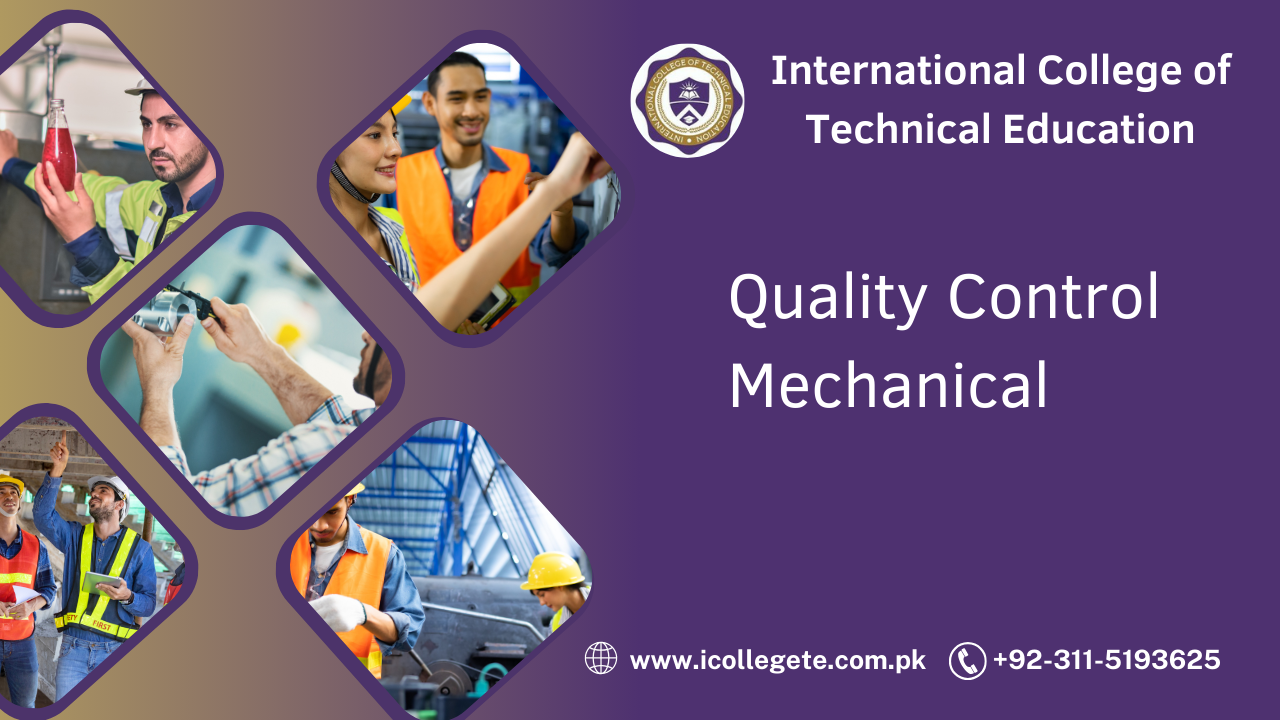
Sialkot, known as the hub for manufacturing and industrial goods, is a city that is constantly evolving to meet global standards of quality. As industries continue to grow, the need for skilled professionals in Quality Control (QC) has become more essential than ever. For those looking to enhance their careers and contribute to the booming manufacturing sector, enrolling in a Quality Control Mechanical course in Sialkot is an excellent opportunity.
The Quality Control Mechanical course is a specialized training program tailored for individuals who are interested in pursuing a career in quality assurance within mechanical engineering and manufacturing sectors. This course offers in-depth knowledge of QC practices, testing procedures, and the use of various instruments to inspect mechanical components. Sialkot, with its thriving industrial base, provides an ideal setting for this course, as it’s home to many manufacturers and export-oriented industries that require stringent quality standards.
Course Overview
This course is designed to provide participants with a deep understanding of mechanical components, systems, and processes, while ensuring that all products meet industry-specific quality standards. The course combines theoretical knowledge with practical skills, focusing on the core aspects of mechanical engineering quality control. Students will learn the latest tools and techniques used in quality control, as well as how to identify potential flaws in mechanical systems and components.
The curriculum of the course is structured to cater to both beginners and those who already have some experience in the mechanical field. Through hands-on training and real-world case studies, participants will be prepared to enter the workforce as competent quality control professionals.
Study Units
The Quality Control Mechanical course in Sialkot covers a range of topics, including but not limited to:
- Introduction to Quality Control and Assurance
- Definitions and Key Concepts
- Importance of Quality Control in Mechanical Engineering
- Overview of International Quality Standards (ISO, ASTM)
- Mechanical Systems and Components
- Types of Mechanical Systems
- Materials Used in Mechanical Manufacturing
- Mechanical Design and Failure Analysis
- Inspection Techniques and Tools
- Measuring Instruments (Micrometers, Calipers, Gauges)
- Non-destructive Testing (NDT) Methods
- Dimensional Inspection and Tolerances
- Statistical Quality Control (SQC)
- Statistical Process Control (SPC)
- Control Charts and Process Capability Analysis
- Sampling Techniques and Inspection Plans
- Troubleshooting and Root Cause Analysis
- Identifying Defects in Mechanical Systems
- Techniques for Root Cause Analysis (RCA)
- Implementing Corrective and Preventive Actions (CAPA)
- Quality Control Documentation and Reporting
- Preparing Quality Control Reports
- Documenting Inspection Procedures
- Quality Audits and Compliance
Learning Outcomes
By the end of this course, participants will be able to:
- Understand and apply the fundamentals of quality control in mechanical manufacturing.
- Use various measurement and inspection tools to detect and prevent defects in mechanical components.
- Analyze mechanical systems and identify areas of improvement for quality enhancement.
- Implement statistical quality control methods to monitor and control production processes.
- Create and maintain accurate quality control reports and documentation.
- Apply root cause analysis techniques to resolve mechanical defects and improve product quality.
- Understand and comply with international quality standards relevant to the mechanical industry.
Course Benefits
The Quality Control Mechanical course in Sialkot offers several advantages for both newcomers and professionals looking to sharpen their skills:
- Increased Employability: As Sialkot’s manufacturing sector grows, the demand for skilled QC professionals increases. This course will significantly enhance your job prospects, providing the qualifications and hands-on experience that employers seek.
- Hands-On Training: The course emphasizes practical training, allowing participants to work with industry-standard equipment and real-world scenarios.
- Expert Instructors: Learn from experienced professionals who have vast knowledge of quality control in mechanical engineering.
- Certification: Upon successful completion of the course, participants will receive a certification that will add significant value to their resumes.
- Industry-Relevant Skills: The course content is designed to meet the needs of today’s manufacturing industry, ensuring that students are equipped with the most current knowledge and skills.
- Competitive Advantage: With the growing emphasis on quality in production, having a qualification in quality control makes you a highly desirable candidate in the job market.
Who is This Course For?
The Quality Control Mechanical course is ideal for:
- Engineering Graduates: Individuals who have completed a degree in mechanical engineering and are looking to specialize in quality control.
- Technicians and Inspectors: Those already working in the manufacturing or mechanical fields who want to enhance their knowledge and advance their careers.
- Quality Control Enthusiasts: People interested in entering the field of quality control but who may not have prior experience in mechanical engineering.
- Industry Professionals: Managers and supervisors in manufacturing or mechanical industries looking to improve the quality of their products and processes.
Future Progression After the Course
Completing the Quality Control Mechanical course opens up several opportunities for career advancement. Graduates can move into higher positions in quality management, such as:
- Quality Control Manager: Oversee the entire quality assurance process in a manufacturing plant.
- Quality Assurance Engineer: Work on designing and implementing quality control systems for mechanical products.
- Production Supervisor: Manage production lines while ensuring products meet quality standards.
- Process Improvement Specialist: Use Lean and Six Sigma methodologies to improve manufacturing processes and product quality.
- Consultant: Provide expert advice on quality control standards and systems to various organizations.
Additionally, graduates can pursue further certifications and qualifications in related fields, such as Six Sigma, ISO certification, and advanced mechanical engineering, to continue their professional growth.
The Quality Control Mechanical course in Sialkot is an invaluable step for anyone looking to enhance their skills and enter the rapidly growing mechanical manufacturing sector. By providing essential knowledge and hands-on experience, the course ensures that participants are well-prepared to meet the rigorous demands of the industry. With the certification, you’ll be equipped to step into a rewarding career in quality control, contributing to the production of high-quality mechanical goods in Sialkot’s thriving industrial environment.