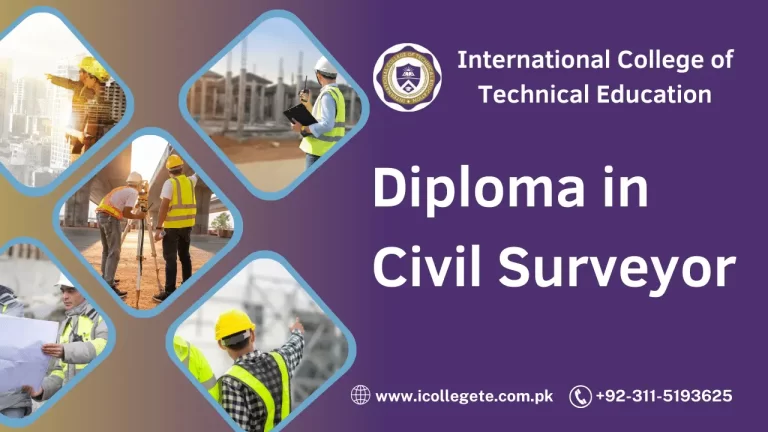
The Civil Surveyor Training Program is designed to provide participants with a comprehensive understanding of land surveying techniques and principles specifically tailored for civil engineering projects. This course covers a wide range of topics, from basic surveying concepts to advanced techniques used in the construction and maintenance of infrastructure projects. Participants will gain hands-on experience with modern surveying equipment and software, enabling them to excel in the field of civil surveying.
Course Benefits:
- In-Demand Skills: The course equips participants with skills that are in high demand within the construction and civil engineering industries, ensuring ample job opportunities.
- Practical Experience: Hands-on training with the latest surveying tools and technologies, enhancing participants’ confidence and competence in real-world scenarios.
- Career Advancement: The knowledge gained opens doors to various career paths, including land surveyor, construction manager, site engineer, and more.
- Industry Relevance: The curriculum is designed in collaboration with industry experts, ensuring that participants learn the most up-to-date techniques and practices.
- Networking: Interact with fellow participants, instructors, and professionals in the industry, building valuable connections for future career growth.
Course Learning Outcomes:
By the end of the Civil Surveyor Training Program, participants will be able to:
- Understand fundamental surveying concepts, terminology, and principles.
- Operate and calibrate various surveying instruments, including total stations, GPS receivers, and laser scanners.
- Conduct accurate measurements, calculations, and data analysis for land and construction projects.
- Create detailed topographic maps, boundary surveys, and construction layout plans.
- Utilize computer-aided design (CAD) software for drafting and design purposes.
- Apply best practices for safety, ethics, and legal considerations in surveying.
- Collaborate effectively with interdisciplinary project teams and communicate technical information clearly.
- Solve common challenges in civil surveying, such as dealing with irregular terrain and managing complex projects.
- Adapt to emerging surveying technologies and integrate them into project workflows.
- Prepare comprehensive survey reports and documentation for project stakeholders.
Course Study Units:
Introduction to Surveying
- Basic concepts and terminologies in surveying
- Types of surveys: land, construction, topographic, boundary, etc.
- History and evolution of surveying techniques
Surveying Instruments and Techniques
- Total stations and theodolites: principles and operation
- Global Positioning System (GPS) and satellite-based positioning
- Laser scanning and LiDAR technology in surveying
- Remote sensing and aerial photography for surveying purposes
Measurement and Data Analysis
- Distance, angle, and elevation measurements
- Traversing and leveling techniques
- Error sources in surveying and error propagation
- Data quality assessment and adjustment
Mapping and Drafting
- Introduction to Computer-Aided Design (CAD) software
- Digital terrain modeling and contour mapping
- Creating topographic and construction layout plans
- Geospatial data integration and analysis
Legal and Ethical Considerations
- Land ownership, boundaries, and property rights
- Surveying laws, regulations, and standards
- Ethical responsibilities of a civil surveyor
Project Management and Communication
- Role of surveyors in project planning and execution
- Collaborating with engineers, architects, and construction teams
- Effective communication of survey findings and recommendations
Entry Requirements:
- High school diploma or equivalent educational qualification.
- Basic understanding of mathematics and geometry.
- No prior surveying experience required, although some familiarity with construction concepts is beneficial.
Future Progressions:
Upon completing the Civil Surveyor Training Program, participants can explore several career and educational pathways:
Land Surveyor: Work as a professional land surveyor, responsible for creating accurate property boundaries and legal land descriptions.
Construction Surveyor: Become a surveyor specializing in construction projects, ensuring precise layout and measurement of structures and infrastructure.
GIS Specialist: Transition into Geographic Information Systems (GIS) roles, involving spatial data analysis and map creation.
Project Management: Combine surveying expertise with project management skills for roles overseeing construction projects.
Higher Education: Pursue advanced degrees in surveying, geomatics, civil engineering, or related fields to further specialize and advance in the industry.
Conclusion:
the Civil Surveyor Training Program provides a comprehensive foundation in land surveying principles, techniques, and technologies, preparing participants for a successful career in the dynamic field of civil engineering and construction. With its practical focus, industry collaboration, and emphasis on hands-on learning, this program equips individuals with the skills and knowledge necessary to excel in the evolving world of civil surveying.